
Digital Marketing for Small Businesses in India: Platforms, Tools and Strategy
.webp&w=3840&q=100)
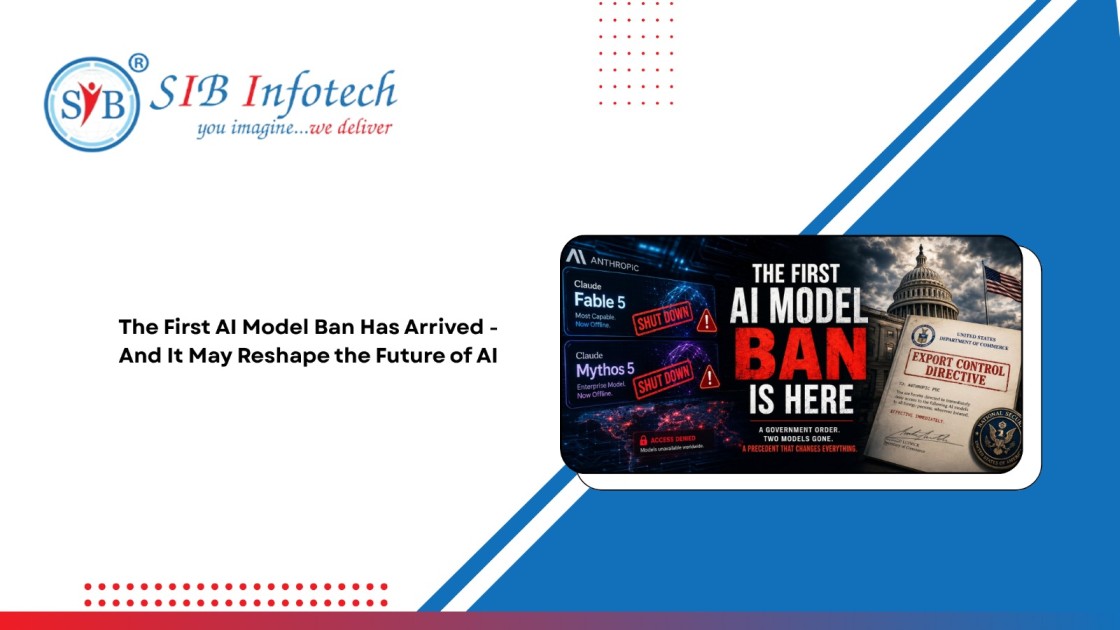

On June 12, 2026, Anthropic received a notice from the U.S. Department of Commerce that would immediately change the trajectory of the AI industry.
Within hours, Claude Fable 5 and Claude Mythos 5, Anthropic's newest and most powerful AI models, were taken offline worldwide.
Not regionally restricted. Not temporarily rate-limited. Completely unavailable.
For the first time, a government had effectively forced a frontier AI company to withdraw a live model from public use on national security grounds.
The move instantly raised questions about AI governance, government authority, corporate responsibility, and the future of advanced model deployment.
More importantly, it established a precedent that every major AI company will now have to consider before launching its next model.
AI companies have voluntarily paused or restricted models before, usually in response to safety concerns discovered internally or flagged by researchers. What makes this different is the direction of the action: a government body compelling a private company to withdraw an already-shipped, publicly available product, on a worldwide basis, rather than the company making that call itself. Regulatory actions against AI companies to date have mostly involved fines, data-practice restrictions, or requirements to add safeguards — not an outright removal of a live model from every market simultaneously.
According to reporting on the notice, the Department of Commerce cited national security grounds when directing Anthropic to disable both Claude Fable 5 and Claude Mythos 5. The speed of the response — models offline within hours of the notice — suggests either a pre-existing compliance framework Anthropic had agreed to follow, or significant pressure to demonstrate immediate cooperation rather than contest the order through a slower legal process first.
Pro Tip: When following fast-moving regulatory stories like this, check whether an action affects only the model's public API access or its underlying weights and research use as well — the two carry very different implications for the industry and are often conflated in early coverage.
Framing the action around national security, rather than consumer safety or content policy, matters because it invokes a different and typically much broader set of governmental authorities — ones that have historically been used for export controls on sensitive technology, rather than everyday product regulation. This framing suggests regulators increasingly view the most capable frontier models similarly to how they've treated other dual-use technologies with both civilian and strategic applications, a categorization that could reshape how future frontier models are reviewed before public release.
Every major AI lab — OpenAI, Google DeepMind, Meta, and others — now has a concrete example of a government being willing and able to force a live model offline entirely, worldwide, on short notice. This changes the calculus for how labs approach pre-release review, international availability decisions, and how much operational flexibility they build in to comply quickly with a similar order if one arrives. Expect increased legal and compliance review cycles before major model launches across the industry as a direct consequence.
| Aspect | Prior Industry Norm | This Event |
|---|---|---|
| Who initiates a withdrawal | The AI company itself | A government agency compelling the company |
| Scope | Regional restrictions or feature limits | Complete worldwide unavailability |
| Stated basis | Safety, content policy, data practices | National security |
| Speed | Weeks to months of negotiation | Hours |
As of this writing, the specific technical capabilities that triggered the national security concern haven't been fully detailed publicly, and it's unclear whether this represents a one-off response to something specific about these two models or the beginning of a broader review framework that will apply to future frontier releases from any lab. Both scenarios have very different implications for how quickly the rest of the industry needs to adapt.
This is the first time a government has forced a live frontier AI model offline worldwide, and regardless of how the underlying dispute resolves, the precedent itself changes how every major AI lab will plan future releases. For businesses relying heavily on AI-driven workflows, marketing, or content generation, this is a good moment to review vendor concentration risk and confirm you're not building critical infrastructure on a single point of potential regulatory failure — a consideration increasingly relevant to any team building AI-assisted digital marketing services or content workflows that depend on continuous model availability.
Our 4.8 average client rating is built on delivering the results we promise. From SEO rankings and lead generation to web development and paid marketing, our clients across 40+ countries have shared their experience publicly.
4.8

Digital Marketing and SEO Agency Reviews about SIB Infotech


Rupesh Maniar
Real Value Finloan Services Pvt. Ltd.
SIB Infotech has designed website for our company. We are very happy with outcome. They are not only professional but also putting their heart into work. We will always refer them for quality work and perfect price.
Reviewed From


Tima Elhajj
CEO & Founder, Tima Media
The client loved the platform that the SIB Infotech team developed for them, especially the calculator function. The company appreciated the team's high level of professionalism, communication, and care on the project. They are happy and willing to work with the team again.
Reviewed From