Best AI Visibility Tracking Tools: The Future of SEO Beyond Google Rankings


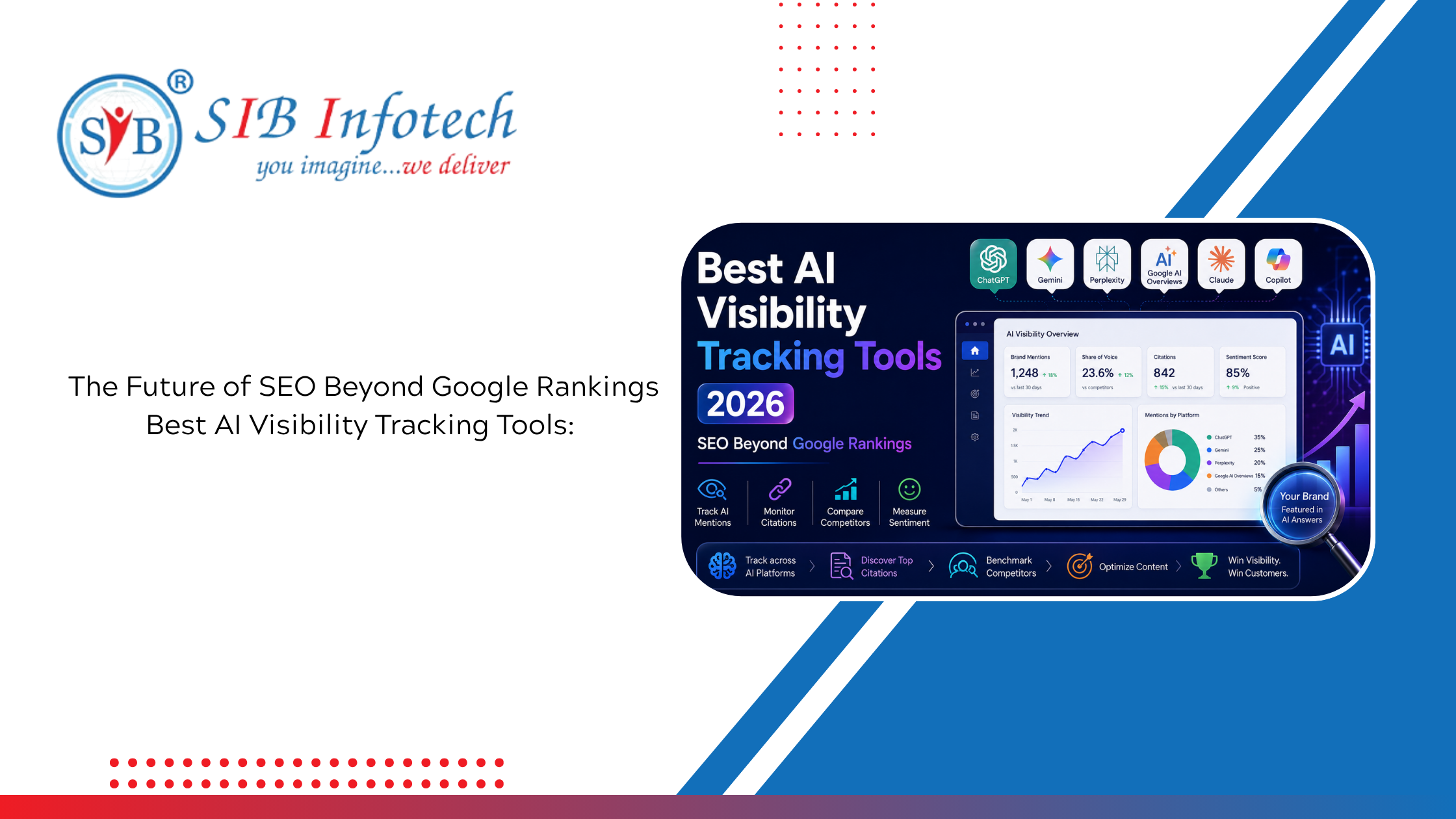
For nearly two decades, SEO success had one simple measuring stick. Rank on page one of Google, get traffic, win the day. That equation worked because search behavior was predictable. People typed a query, scanned ten blue links, clicked one or two, and moved on. The picture in 2026 looks completely different. Buyers now ask ChatGPT for product recommendations, run research inside Perplexity, let Gemini handle entire shopping decisions, and read AI Overviews on Google before ever scrolling to organic results. This shift has made the best ai visibility tracking tools a serious requirement for brands that want to stay discoverable. If an AI assistant never mentions your business, a large chunk of your audience may never know you exist.
This blog walks through why AI visibility tracking matters, how it differs from old-school rank tracking, what features to look for in a tool, and which platforms are worth considering in 2026.
Old SEO dashboards focus on one thing: where does your URL sit in Google's organic results for a given keyword. That data still has value, but it captures only a small slice of how people actually find brands today.
Look at how a typical buyer searches now. Someone planning a kitchen renovation might first ask ChatGPT for the top modular kitchen brands in their city. They could then run a quick check on Perplexity to confirm pricing and reviews. After that, they might switch to Google, where the first thing they see is an AI Overview summarizing options. They may never click a traditional link at all.
Each of these moments is a search. Each one decides whether your brand gets recommended or skipped. Yet none of them show up in traditional rank trackers. Your business could rank number three on Google for your main keyword and still get zero mentions inside ChatGPT, Gemini, or Claude.
That gap is exactly what AI visibility tracking solves. The job has shifted from chasing rank positions to tracking presence inside AI-generated answers. Brands that ignore this shift will keep watching their organic traffic decline while their competitors quietly capture mind share inside AI conversations.
AI visibility tracking looks at how often your brand, products, or content gets mentioned by large language models and AI search engines when users run relevant queries. A proper tool monitors several layers.
The tool runs hundreds or thousands of prompts across ChatGPT, Gemini, Perplexity, Claude, Copilot, and other AI engines — then counts how many of those answers include your brand name.
Many AI answers include source links. A good tool tells you which of your pages get cited, on which platform, and for which prompts. This data is gold for content teams, because it shows what kind of pages AI engines trust enough to quote.
Being mentioned is good. Being mentioned positively is better. The best tools for tracking brand visibility in AI search results also score whether each mention paints your brand in a favorable or unfavorable light, so reputation issues can be fixed before they spread.
This shows how often your brand appears compared to direct competitors for the same set of prompts. If a rival shows up in 60 percent of answers and you show up in 12 percent, that is a clear gap to close.
The better platforms track Google AI Overviews independently. These overviews now appear for a huge share of informational queries in India and globally. A purpose-built AI overview search rank tracking software treats this as its own search surface, because the rules for getting cited there are different from regular organic ranking.
Not every platform calling itself an AI visibility tool actually delivers what a serious SEO team needs. Use this checklist while evaluating options.
The tool should track ChatGPT, Gemini, Perplexity, Claude, Copilot, and Google AI Overviews at a minimum. A tracker that only watches one platform leaves big blind spots.
You should be able to upload your own prompts, let the tool auto-suggest prompts based on your industry, and group them by topic, funnel stage, or persona. Without flexible prompt management, the data quickly turns into noise.
AI models update their training and retrieval indexes often. A tracker that only refreshes weekly will miss real swings in visibility.
You need to see your brand alongside three to ten competitors, not just on its own. Benchmarking should be built in, not bolted on.
The tool should show which third-party domains AI engines pull from when they answer questions in your category. This tells you where to earn mentions, place content, or pursue PR outreach.
A clean dashboard, white-label PDFs, and CSV exports save hours every month — especially for agencies handling multiple clients.
The market has split into a few clear groups in 2026.
Built from scratch for tracking generative search. They tend to have the deepest features, the widest model coverage, and the most thoughtful prompt management. Many of the best tools for tracking brand visibility in AI search results sit in this group, because the founders made AI tracking their only focus.
These platforms already had rank tracking, backlink analysis, and content tools. They bolted on generative search tracking to give existing users one place to manage everything.
These expanded into AI mentions and are useful if your priority is reputation and share of voice rather than pure SEO performance. A small business might be fine with the AI module inside an SEO suite they already pay for. A mid-sized brand competing in a crowded category usually benefits from a dedicated platform. Enterprises often run two tools at once.
This section covers some of the most talked-about platforms in the space. Pricing, features, and positioning shift quickly, so always check current details on each vendor's site before committing.
One of the early movers in the dedicated AI visibility category. It tracks brand mentions, citations, and sentiment across ChatGPT, Gemini, Perplexity, Copilot, and Google AI Overviews. The platform leans toward enterprise users, with strong competitor benchmarking and detailed citation source reports. Brands that want a deep look at why AI engines pick certain sources tend to find Profound useful.
Focuses on prompt-level tracking. You set up the prompts that matter for your business and the tool runs them daily across major AI platforms. It then tells you exactly how your brand appeared, which sources were cited, and how rankings shifted over time. The interface is friendly enough for in-house marketers without a heavy SEO background.
Positions itself as an AI mode tracking tool built for the next phase of search. It covers Google AI Mode, ChatGPT, Gemini, and other generative surfaces. Strong reporting and clean dashboards make it popular with agencies that need to present results to non-technical clients.
Tracks brand mentions and competitor share of voice inside AI answers. The platform pulls together prompt performance, citation sources, and sentiment in a single view. It is often picked by mid-market brands that want clear, actionable reports without an enterprise-level price tag.
Offers AI search tracking along with optimization recommendations. It does not stop at telling you where you stand — it also suggests content fixes, schema additions, and citation-building actions to lift your visibility. This makes it a strong fit for teams that want a workflow tool, not just a monitoring tool.
Semrush added a dedicated AI toolkit to its main platform. Users can run AI visibility tracking, prompt monitoring, and competitor analysis inside the same dashboard they already use for keyword research and backlinks. For brands already paying for Semrush, this is the easiest entry point.
Built to track brand mentions across the web, including inside AI Overviews on Google. It pairs well with the rest of the Ahrefs suite for content gap analysis and link tracking. Brands that lean heavily on technical SEO often pick Ahrefs as their main hub, and many use it as their primary AI overview search rank tracking software to keep AI Overview data in the same place as their organic SEO reports.
HubSpot offers a free AI search grader that gives a quick health check on how often your brand appears in AI answers for a starter set of prompts. It is not as deep as paid platforms, but it is a good starting point for small businesses curious about their current AI visibility before investing in a full tool.
Built AI search rank tracking into its enterprise SEO platform. It covers Google AI Overviews and major LLMs, with strong support for large keyword sets and multi-market reporting. Larger brands managing SEO across many regions tend to find seoClarity helpful, especially as an AI mode tracking tool that pairs Google AI Mode data with traditional ranking views.
Writesonic moved into generative engine optimization with a tool that combines tracking and content recommendations. It is positioned for marketers who want to see how their content performs across AI search and then act on the insights inside the same platform.
The best choice depends on what you actually need to do every week. A small business might want a clean dashboard and basic prompt tracking. A growing brand in a competitive category might need deep competitor benchmarking. An agency serving many clients usually needs white-label reports and multi-account access.
Start by writing down the three questions you most want answered each month. For most brands, those questions sound like this: How often does my brand show up in AI answers for my main topics? Which competitors are eating my share of voice? Which content of mine gets cited and which gets ignored?
Then shortlist two or three tools and book trials. When comparing the best tools for tracking brand visibility in AI search results, run the same prompt set in each platform and compare the outputs side by side. Look at refresh frequency, prompt limits, supported platforms, and how easy it is to export data for monthly reports.
Budget matters as well. Pricing in this space ranges from free starter tiers to enterprise contracts in the tens of thousands of dollars per year. Pick a tool whose price matches the size of the decisions you plan to make from the data. There is no point paying for an enterprise platform if your content team can only act on a handful of insights each month.
Buying a tool is the easy part. Getting value out of it takes process. Use these habits to make AI visibility tracking actually move the needle.
Before optimizing anything, capture your current share of voice, mention frequency, and top citation sources. Without a baseline, you cannot tell whether your efforts are working.
Awareness prompts, comparison prompts, and decision prompts all behave differently. Separate them so you can see where your visibility is strong and where it falls off.
If a publication, directory, or review site keeps showing up as a source for answers in your category, that domain becomes a top priority for guest posts, PR outreach, or paid placements.
AI engines reward content that is clear, well structured, and easy to extract facts from. Pages with strong headings, short paragraphs, FAQ blocks, and proper schema tend to get cited more often.
Use a proper AI overview search rank tracking software to monitor which queries trigger overviews in your space and which sources Google picks. This is one of the highest-traffic AI surfaces in 2026, and treating it like ordinary organic results will miss most of the action.
Focus on conversational queries separately. The two surfaces behave differently and reward slightly different content patterns, so reporting on them separately gives a much clearer picture.
Share of voice, total mentions, top cited pages, and top competitor gaps are enough for most stakeholders. Avoid drowning leadership in screenshots and raw data.
For small and mid-sized businesses in India, the case for AI visibility tracking is just as strong as it is for global brands. Indian buyers now use ChatGPT and Gemini for everything from picking a CA firm to comparing PG accommodation. Local searches that once happened only on Google now spread across AI platforms.
A local fitness studio in Mumbai, a homeopathy clinic in Pune, or a B2B chemicals supplier in Ahmedabad can each benefit from knowing how often AI engines mention their brand for their main service queries. The investment can start small — a free grader or a starter plan on a tool like Otterly.AI or Peec AI is often enough to surface the first useful insights.
The brands that act now will build a citation footprint that competitors find very hard to displace later. AI engines lean heavily on patterns they have already seen. Being mentioned often, in good context, on credible sources, is the new version of building domain authority.
Search has moved from one screen with ten blue links to a wide set of AI surfaces that summarize, recommend, and decide on behalf of users. Old rank trackers cannot see most of this activity. That is the gap closed by the best AI visibility tracking tools, which give brands a clear view of how often they appear, where they get cited, and how they stack up against competitors inside AI answers.
The tool you pick matters less than the habit of looking at this data every week and acting on it. Whether you go with a dedicated platform like Profound or Otterly.AI, an SEO suite that added AI features like Semrush or Ahrefs, or a free grader to get started, the important step is to begin tracking now.
The brands that build a strong AI footprint in 2026 will spend the next several years harvesting cheap, high-trust mentions while late movers scramble to catch up. If your business is serious about staying visible in search, AI visibility tracking has stopped being optional. It is the new floor of any modern SEO programme.