How to Rank #1 on Google: A Step-by-Step SEO Guide
.webp&w=3840&q=100)


Small businesses in India do not need to be active on every digital platform. They need to reach the right customers, make it easy for them to enquire or buy, and measure whether marketing is contributing to business goals.
The right mix depends on what you sell, where your customers are, how they make decisions and what your team can manage consistently. A local service provider may prioritise Google Search and Maps. An ecommerce brand may need product pages, paid campaigns, social content and email. A B2B startup may focus on search, LinkedIn and lead follow-up.
This guide answers common questions about choosing platforms, building a strategy, finding an agency, learning digital marketing and planning content.
There is no single best platform for every small business. Choose based on customer intent, product type, service area, buying cycle and the capacity to maintain each channel.
| Platform or channel | Best suited for | Practical starting point |
|---|---|---|
| Website and landing pages | Any business that needs a central place to explain its offer and convert visitors | Create clear service or product pages with useful details, proof, FAQs and a visible enquiry or purchase action |
| Google Search and SEO | Businesses whose customers actively search for a solution | Build useful pages around customer problems, product categories and service locations |
| Google Business Profile | Local businesses that meet customers in person or serve defined areas | Keep business details, hours, categories, photos and contact routes accurate |
| Google Ads | Reaching people who are searching for a product or service | Start with focused, high-intent searches and a relevant landing page |
| Instagram and Facebook | Consumer brands, local services, visual products and community-led businesses | Choose one or two repeatable content formats and respond to comments and messages |
| YouTube | Products or services that benefit from demonstrations, education or detailed explanations | Publish useful answers, product walkthroughs or customer education videos |
| B2B companies, professional services and recruitment-led brands | Share expertise and practical insights on both relevant personal profiles and the company page | |
| Email and messaging | Businesses that need to nurture enquiries, encourage repeat purchases or maintain customer relationships | Collect consent appropriately, segment contacts and send relevant updates |
For a local business, a sensible starting combination is often a useful website, an accurate Google Business Profile, local SEO and one social channel the business can maintain. Google says a Business Profile can help businesses manage how they appear on Search and Maps; features and eligibility can vary by business type and region.
For an ecommerce business, prioritise product pages, mobile usability, accurate product information, analytics and channels that can reach shoppers. Search and paid campaigns may capture existing demand; social content and paid social can introduce products to new audiences. The right mix depends on margins, repeat purchase potential and the ability to fulfil orders.
For a B2B startup, a strong website, search visibility, LinkedIn and targeted lead generation may be more useful than trying to post daily on every social network. Because the buying cycle can be longer, useful content and a clear follow-up process matter.
How to choose: Write down the customer’s problem, where they look for answers and the action you want them to take. Select one or two channels that match those behaviours. Expand when you can maintain quality and measure outcomes.
See SIB Infotech’s digital marketing services and its guide to digital marketing strategies for online businesses.
An effective startup strategy connects the product, audience, channel and conversion process. It should explain what the business is trying to achieve, what it will do first and how it will judge whether the work is helping.
Describe the customer segment in practical terms: their need, location, buying context, alternatives and likely objections. “Small businesses” is usually too broad to guide a campaign. “Independent clinics in Indian metro areas seeking more qualified appointment enquiries” is more actionable.
Explain what the product or service does, who it is for, why the customer should consider it and what evidence supports the claim. Avoid promises that cannot be substantiated. A clear offer helps advertising and landing-page copy stay focused.
Choose an objective such as qualified enquiries, online purchases, booked consultations, repeat purchases or a lower cost per qualified lead. Impressions and followers can help diagnose performance, but they do not replace measures tied to leads, revenue or retention.
Choose channels based on customer intent and the company’s resources. Search can reach people already looking for a solution. Social content can build familiarity and demonstrate a product. Email can support follow-up and retention. Paid advertising can test demand, but requires a budget and measurement discipline.
Before increasing traffic, check that the relevant page explains the offer, works well on mobile, loads reliably, answers common questions and makes the next step obvious. A campaign can attract clicks without producing useful enquiries if the page is unclear or the enquiry process is difficult.
Create content that helps customers make a decision: comparisons, how-to guidance, product demonstrations, pricing context, case studies with verified details and answers to common objections. For search visibility, follow Google’s guidance on helpful, reliable, people-first content.
Set up analytics and conversion tracking before campaigns scale. Decide what qualifies as a lead or sale and how you will distinguish qualified outcomes from low-intent activity. Use Google Search Console to review how a site performs in Google Search, including queries and pages. Use analytics and CRM records to understand what happens after a visitor clicks or submits a form.
Test meaningful changes where possible: the audience, offer, creative, landing page or follow-up process. Review results on a schedule that suits the channel and sales cycle. Do not judge a long-cycle B2B campaign only by its first few days of clicks.
Assign responsibility for content approvals, lead response, campaign budgets, reporting and website updates. Marketing can generate demand, but slow or inconsistent follow-up can reduce the number of leads that become customers.
A practical startup sequence: clarify the audience and offer → prepare the website and tracking → launch one or two relevant channels → review lead quality and conversion data → improve the weakest step → expand when the team can support more volume.
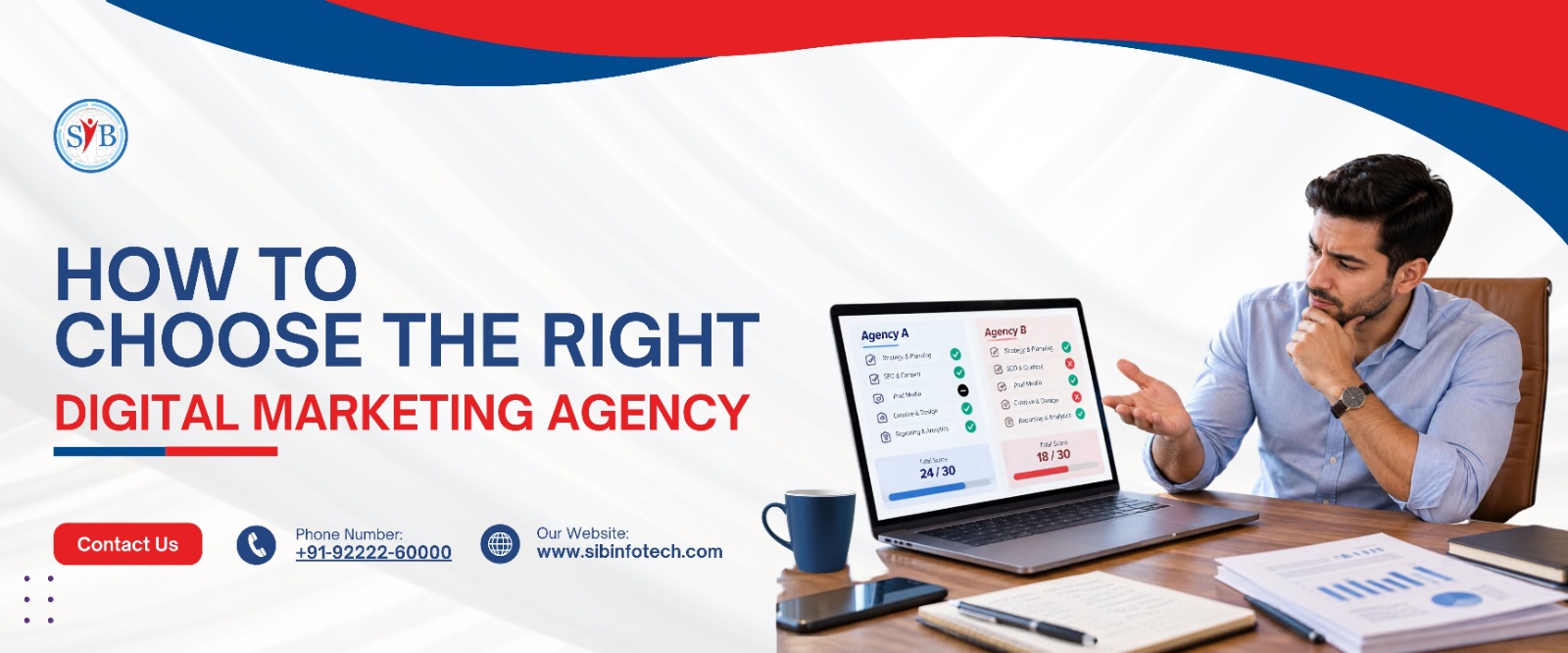
Start by defining what you need the agency to do. “Digital marketing” can mean SEO, paid search, social media, content, website development, analytics or a combination. A nearby agency may be convenient for meetings, but proximity alone does not establish expertise or fit.
Use this checklist when evaluating agencies:
1. Match experience to the work. Ask for examples relevant to your business model, target audience or required service. A retail campaign and a B2B lead-generation programme need different approaches.
2. Ask how the work will be delivered. Request the proposed scope, sequence, communication rhythm, approval responsibilities and the people who will work on the account.
3. Understand what will be measured. Agree on business outcomes and reporting measures before work begins. Ask how the agency will assess lead quality, sales or other outcomes—not only reach and clicks.
4. Confirm account and asset ownership. Your business should retain appropriate access to its website, advertising accounts, analytics, creative files and customer data. Clarify access and handover arrangements in writing.
5. Review the proposal carefully. Check what is included, excluded, billed separately and dependent on your team. Compare scopes, not just monthly fees.
6. Look for clear communication. The agency should explain its recommendations in language you can evaluate and flag assumptions, dependencies and risks.
7. Be cautious about guarantees. Rankings, lead volumes and revenue depend on many factors. Ask how a promised outcome is defined and supported.
A useful first conversation should cover your goals, current marketing, customer journey, budget range, capacity to respond to leads and the evidence needed to judge progress.
SIB Infotech has a guide on how to choose a digital marketing agency and a page describing its digital marketing services in India. Review any provider’s claims and scope directly before deciding.
The right platform depends on which networks you use, how many people need access, how often you publish and whether you need approvals or reporting.
Choose a tool based on the work it removes. If the main issue is missed posts, scheduling may help. If approvals are delayed, look for a clear review workflow. If messages go unanswered, assign inbox ownership and response expectations; a publishing tool alone will not solve that problem.
Whatever tool you use, keep access secure, assign roles carefully and maintain a record of account ownership.
The right platform depends on which networks you use, how many people need access, how often you publish and whether you need approvals or reporting.
Choose a tool based on the work it removes. If the main issue is missed posts, scheduling may help. If approvals are delayed, look for a clear review workflow. If messages go unanswered, assign inbox ownership and response expectations; a publishing tool alone will not solve that problem.
Whatever tool you use, keep access secure, assign roles carefully and maintain a record of account ownership.
Look for an agency that understands both organic search and ecommerce operations. Ecommerce SEO can involve product and category architecture, technical crawling and indexing, product data, duplicate or thin pages, internal linking, mobile experience and coordination with developers.
Ask prospective agencies:
Avoid evaluating an ecommerce SEO proposal solely by the number of keywords or backlinks promised. The work should connect search visibility to useful shopping journeys and measurable commercial outcomes.
See SIB Infotech’s ecommerce SEO services. Review the proposed scope, team, examples and measurement approach directly with any agency you consider.
A useful learning path combines structured coursework with practice on real or sample campaigns.
A certificate can document course completion or assessment, but it does not by itself prove campaign experience or business results. To build practical skill, create a sample brief, set up a measurement plan, analyse a campaign dataset and document what you would test next.
A well-rounded curriculum should include customer research, SEO, paid advertising, content, social media, analytics, conversion optimisation, privacy and reporting.
Use a combination of tools because each reveals a different part of the market. Competitor tools provide clues, not complete access to another business’s campaign data.
A disciplined competitor review records the competitor, audience, offer, landing page, creative angle, apparent call to action and date observed. Then ask what customer need the ad addresses and whether your business can make a more useful or differentiated offer.
Do not copy a competitor’s creative or assume that a long-running ad is profitable. Use public observations to develop hypotheses, then test them against your own data.
Affordable does not mean the same thing as low-cost. A service is useful when its scope fits the startup’s current stage, supports a business objective and can be delivered consistently.
Common starting options include:
SEO foundations: Technical checks, search-intent research, page improvements and a small number of high-priority content pages.Paid search setup and management: A focused campaign structure, conversion tracking, landing-page alignment and regular review.Social media planning and production: A manageable publishing cadence, content themes, creative templates and community-response responsibilities.Website or landing-page improvements: Clear positioning, mobile usability, proof, enquiry forms and conversion tracking.Content strategy: Priority questions and pages that support customer education and sales conversations.Analytics setup: Measurement for enquiries, purchases and lead quality so the business can make better channel decisions.To compare proposals, ask each agency to separate strategy, setup, recurring management, creative production, media spend, software and taxes. Confirm the minimum commitment, revision limits, response times, reporting and exit terms. Advertising spend is generally separate from agency fees, so make sure the proposal explains this clearly.
If the budget is limited, start with one primary acquisition channel and the essential website or tracking work that supports it. A local service company may focus on local search and a well-built service page; an ecommerce startup may first improve product pages and measurement before expanding advertising.
SIB Infotech provides a digital marketing services overview and pricing information. Confirm current inclusions and costs directly before making a decision, as packages and pricing can change.
A useful content plan helps a defined audience understand a problem, evaluate options and take an appropriate next step. It should also be realistic for the team to produce and maintain.
Choose what content should support: awareness in a defined market, qualified enquiries, product education, customer retention or another measurable goal. “Publish more” is an activity, not a business objective.
Document who the content is for, what they need, what they already know, what may prevent them from buying and what information they need before taking action.
Use sales conversations, support tickets, customer reviews, search queries, internal site search and keyword research to build a question list. Group related questions by journey stage: discovery, comparison, purchase and post-purchase.
Pillars might include product education, how-to guidance, comparisons, customer stories, industry explainers or company expertise. Keep them tied to customer needs and the brand’s actual capabilities.
Choose formats the team can produce well: articles, short videos, webinars, guides, email or social posts. Adapt the message for each channel rather than copying the same asset everywhere.
For each item, record the topic, intended audience, format, owner, source material, reviewer, publishing date, distribution plan and success measure. A consistent, manageable schedule is more useful than an ambitious calendar the team cannot maintain.
For SEO, AEO and GEO, put a concise answer near the top, use descriptive headings, define unfamiliar terms, support factual claims with reliable sources and identify the author or reviewer when appropriate. Add examples and original insight that demonstrate real understanding.
Link from the article to relevant service, product and supporting resource pages using descriptive anchor text. Add links from existing relevant pages back to the new content. Internal links help readers continue their research and help search engines understand how pages relate.
Share content through relevant social channels, email, sales conversations and partner networks. A detailed article can become several short posts, a checklist or a video outline, provided each version remains accurate and useful.
Track metrics that match the objective: qualified organic visits, assisted enquiries, conversions, email engagement or returning customers. Use Search Console performance reports to review queries, pages, clicks and impressions from Google Search. Update content when products, policies, evidence or customer questions change.
See SIB Infotech’s content marketing services and its guide to increasing website traffic through blogging.
Search engine optimisation (SEO) helps search engines discover, understand and surface useful pages. Answer engine optimisation (AEO) focuses on making information clear and direct when a system needs to answer a question. Generative engine optimisation (GEO) focuses on making information useful, credible and understandable to systems that generate answers from multiple sources.
In practice, the foundations overlap:
No format, schema type or wording guarantees inclusion in an AI-generated answer. The practical goal is to publish content that is useful to customers and understandable to search systems, then monitor relevant visibility and engagement.
Google says structured data can help make pages eligible for certain rich results, but eligibility does not guarantee that a result will appear. Follow its structured data guidelines and make sure markup matches the visible page.
Small businesses in India can make digital marketing more manageable by choosing a focused channel mix, improving the pages where customers take action, measuring qualified outcomes and publishing useful answers to real customer questions. Start with the work that supports the next business goal, then expand as the team and evidence support it.
Start where customers already look for the product or service and where the business can respond reliably. Local businesses often begin with a website, Google Business Profile and local search presence. Other businesses may prioritise ecommerce product pages, paid search, social content or LinkedIn based on customer behaviour.
Our 4.8 average client rating is built on delivering the results we promise. From SEO rankings and lead generation to web development and paid marketing, our clients across 40+ countries have shared their experience publicly.
4.8

Digital Marketing and SEO Agency Reviews about SIB Infotech


Rupesh Maniar
Real Value Finloan Services Pvt. Ltd.
SIB Infotech has designed website for our company. We are very happy with outcome. They are not only professional but also putting their heart into work. We will always refer them for quality work and perfect price.
Reviewed From


Tima Elhajj
CEO & Founder, Tima Media
The client loved the platform that the SIB Infotech team developed for them, especially the calculator function. The company appreciated the team's high level of professionalism, communication, and care on the project. They are happy and willing to work with the team again.
Reviewed From