Google Ads Keyword Match Types Explained (2026 Guide with Smart Bidding)
.webp&w=3840&q=100)

Choosing a digital marketing agency is a business decision, not just a search for someone to manage campaigns. The right partner should understand what your business is trying to achieve, recommend work that fits those goals, and explain how progress will be measured.
That applies whether you run a startup, a small or medium-sized business, or a growing mid-sized company. It also applies whether you are targeting customers in India or expanding into markets such as the US, UK, Canada, or Australia.
In short: choose an agency that understands your goals and audience, can explain a practical strategy, shows relevant evidence, reports clearly, and has the people and processes to deliver.
Use the guide below to compare agencies and decide what to ask before you commit.
Before contacting agencies, describe the business outcome you want. “We need more digital marketing” is a starting point, but it does not tell an agency what to prioritise.
Your goal might be to:
Also consider your timeframe, budget range, current marketing activity, and what your in-house team can support. You do not need a complete strategy before speaking to an agency. You do need enough context for agencies to recommend a relevant next step.
The right combination of services depends on the problem you are trying to solve. For example, a business with a strong website and a long-term growth horizon may want to explore SEO services. A business seeking to test demand or generate enquiries sooner may consider PPC management.
Other businesses may need support with social media marketing, content marketing, or website development. If the website makes it difficult for customers to understand an offer or take action, more advertising alone may not solve the problem.
Ask agencies to explain why they recommend a particular service or channel, how it connects to your goal, and what other work it depends on. You may need one specialist service, coordinated support across several channels, or a smaller project before making a larger commitment.
An agency does not need to have worked with an identical company to be relevant. It should, however, understand the factors that shape your marketing challenge.
Ask about experience with businesses that have similar:
If you are targeting international customers, ask how the agency will research each market. Audience expectations, search behaviour, competition, and the cost of advertising can differ by country. A strategy that performs in India may need changes before it is used in the US, UK, or another market.
Review relevant case studies, but look beyond the headline result. Ask what the agency did, how long it took, how the outcome was measured, and what other factors may have contributed. A past result can help you understand an agency’s experience; it cannot guarantee the same result for your business.
A proposal should show that the agency has understood your situation. It should explain:
Be cautious if a proposal is mostly a list of services, generic promises, or an unexplained package. Ask the agency to connect each recommended activity to the business outcome you discussed.
You should also be able to ask questions and understand the answers. Clear explanations are a useful sign of how the agency may communicate once work begins.
If the proposal includes SEO or content, ask how the agency will create useful, original material for your audience and assess its quality. Google’s people-first content guidance is a useful reference for discussing content quality with a prospective partner.
The lowest quote may not cover the work you need, while a higher fee does not automatically mean a better fit. Compare what each proposal includes.
Check whether the fee covers:
Also review contract length, renewal and cancellation terms, payment schedule, data handling, and ownership of accounts and creative assets. Ask how you will retain access to advertising and analytics accounts if the engagement ends.
For Google Ads, Google explains how account access and permissions work in its guide to managing access to a Google Ads account. Make sure the arrangement gives your business appropriate access to its own account and data.
Reports should help you make decisions, not just list activities. Ask how the agency will connect its work to the goal you set.
Depending on your business, useful measures may include qualified enquiries, conversion rate, online sales, cost per qualified lead, or revenue attributed to marketing. Website traffic, impressions, clicks, rankings, and engagement can help explain performance, but they should be interpreted in the context of the business objective.
For broader search fundamentals, Google’s SEO Starter Guide explains how clear, useful pages help people and search engines understand a site. Use it as a baseline for questions, not as a formula for guaranteed rankings.
Before you start, agree on:
If measurement depends on changes to your website, CRM, or sales follow-up process, clarify who is responsible for them. Marketing results are harder to interpret when important parts of the customer journey are not tracked.
The agency’s presentation is only one part of the engagement. Find out who will manage your account and who will carry out the work.
Ask:
A sound process should make responsibilities clear on both sides. Your team may need to provide product information, approve content, share account access, or follow up with leads. Factor that work into your decision.
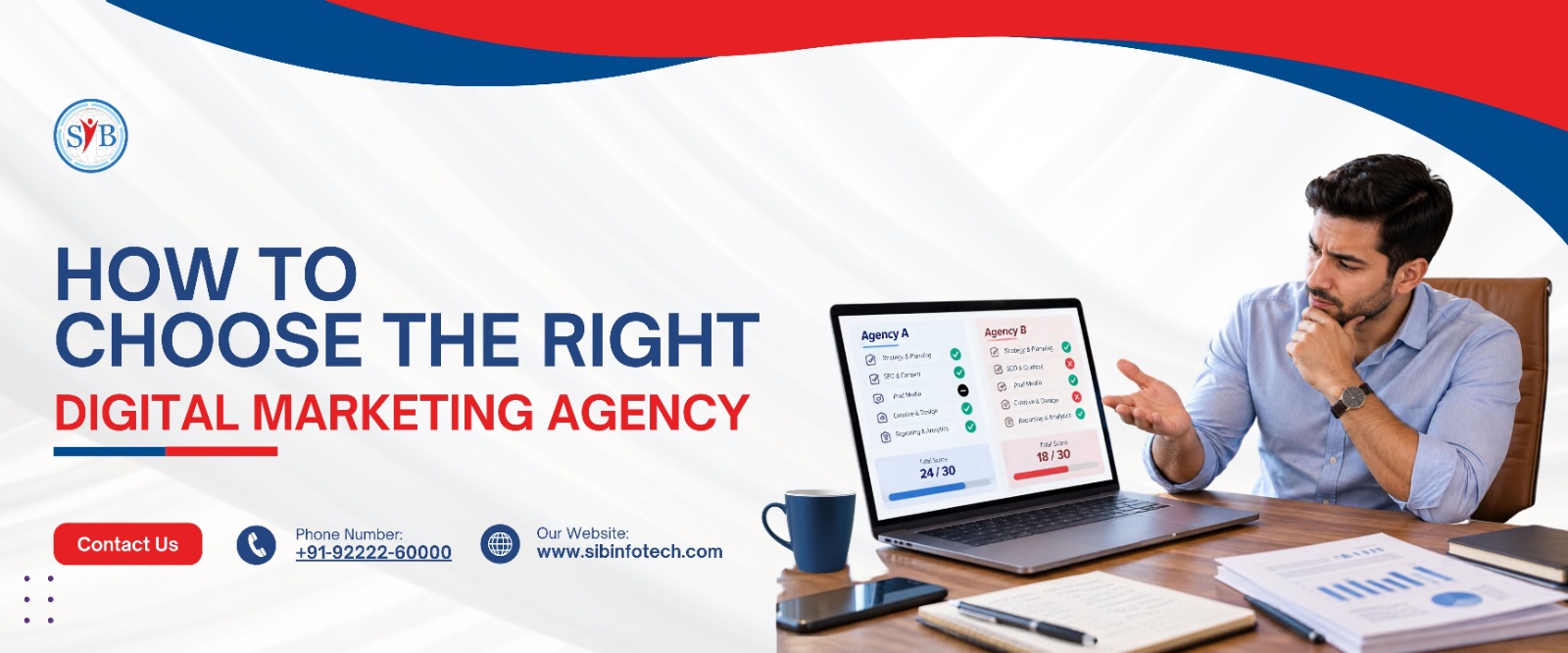
After speaking with agencies, score each one against the same criteria. You can use a simple 1–5 scale and give more weight to what matters most for your business.
| Criterion | What to assess |
|---|---|
| Strategic fit | Does the plan address your business goal and audience? |
| Relevant experience | Can the agency explain comparable work and its limits? |
| Market understanding | Does it understand your target geography and customers? |
| Measurement | Are outcomes, tracking, and reporting clearly explained? |
| Team and capacity | Are the people and delivery process clear? |
| Scope and cost | Can you see what is included and what costs extra? |
| Communication | Are answers direct, understandable, and timely? |
| Contract and access | Are terms, data, accounts, and assets addressed? |
A scorecard will not make the decision for you. It can help your team compare proposals consistently and spot questions that still need answers.
Take time to investigate if an agency:
Ask direct follow-up questions. A credible agency should be able to explain what it can control, what depends on other factors, and how it will communicate progress.
An agency may suit a business that needs specialist skills, additional delivery capacity, or support across connected marketing channels. In-house hiring may make more sense when the work requires a dedicated person embedded in the company each day. A focused specialist engagement may be enough when the need is clearly defined.
Consider your goals, internal capacity, expected level of involvement, and budget before deciding. The best arrangement is one your business can support and evaluate—not simply the one with the longest list of services.
Take these questions to your shortlist:
A useful answer should be clear enough for your team to compare with other proposals.
The right digital marketing agency should understand the outcome you are working toward, explain a credible approach, and be transparent about measurement, scope, responsibilities, and cost. Use the same criteria to assess every proposal, and ask follow-up questions wherever the plan is unclear.
Want an outside perspective on your current marketing? Request an audit from SIB Infotech. Share your website, priority goals, and target markets so the conversation can start with your business needs.
Look for a clear understanding of your business goal, a relevant and explained strategy, evidence of comparable work, transparent reporting, a capable delivery team, and clear scope and contract terms.
Our 4.8 average client rating is built on delivering the results we promise. From SEO rankings and lead generation to web development and paid marketing, our clients across 40+ countries have shared their experience publicly.
4.8

Digital Marketing and SEO Agency Reviews about SIB Infotech


Rupesh Maniar
Real Value Finloan Services Pvt. Ltd.
SIB Infotech has designed website for our company. We are very happy with outcome. They are not only professional but also putting their heart into work. We will always refer them for quality work and perfect price.
Reviewed From


Tima Elhajj
CEO & Founder, Tima Media
The client loved the platform that the SIB Infotech team developed for them, especially the calculator function. The company appreciated the team's high level of professionalism, communication, and care on the project. They are happy and willing to work with the team again.
Reviewed From