

Google Ads Keyword Match Types Explained (2026 Guide with Smart Bidding)
.webp&w=3840&q=100)
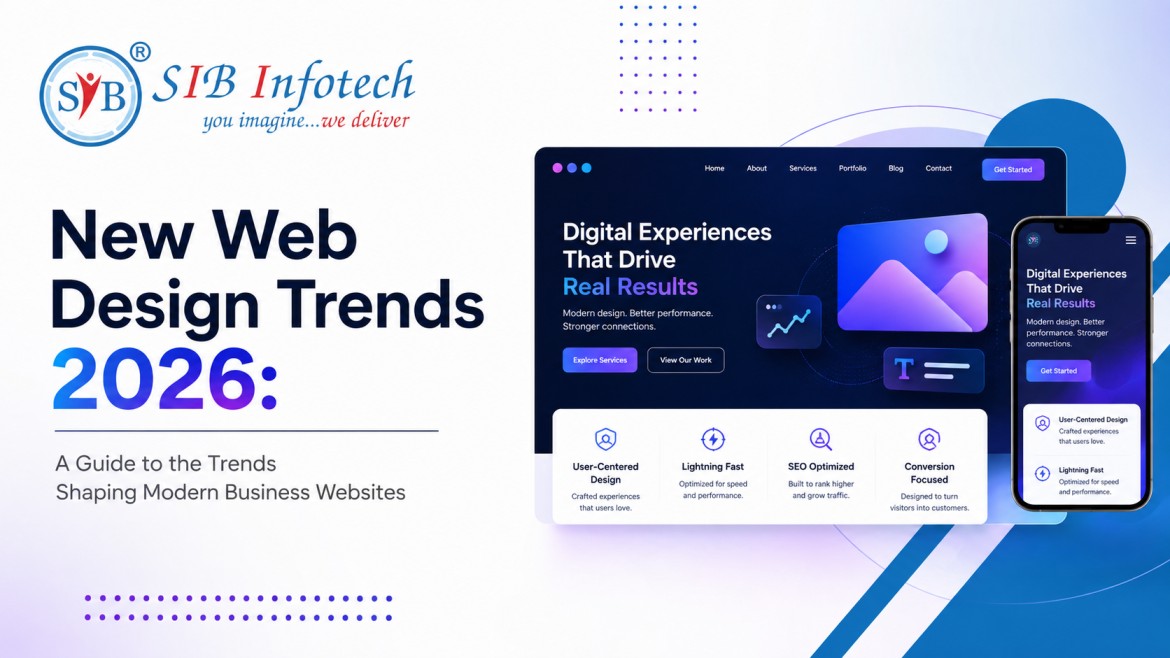

Your website is often the first thing a potential customer sees. Before they read a word of your copy, they have already formed an opinion based on how your site looks, how fast it loads, and how easy it is to navigate.
In 2026, that first impression window is shorter than ever. The new web design trends this year are not about decoration. They are about performance, trust, and making sure visitors stay long enough to convert.
This blog covers everything businesses need to know: the trends reshaping how websites are built, what the newest approaches to website design look like, the top SaaS-specific design shifts, and the user experience standards that separate sites that rank from sites that get ignored.
Whether you are planning a complete website redesign or refining your existing digital presence, understanding these trends will help you create a website that not only looks modern but also delivers measurable business results.
Let's explore the web design trends that are defining 2026 and how you can use them to stay ahead of the competition.
For most of the last decade, "web design" was treated as a cosmetic exercise — pick a template, choose a color palette, add some stock photography, and launch. That approach no longer works. Search engines now factor page experience directly into rankings, AI assistants summarize your content before a visitor even reaches your site, and users abandon pages that take more than a few seconds to become interactive. A website in 2026 has to do three jobs simultaneously: look credible, load instantly, and structure its content so both humans and machines can understand it. Businesses that treat design as decoration rather than infrastructure are the ones losing traffic to competitors who treat it as a growth lever.
The biggest shift in 2026 is that websites no longer show every visitor the same homepage. AI-driven personalization engines now adjust headlines, product recommendations, and calls-to-action based on referral source, past behavior, device type, and even time of day. A visitor arriving from a Google Ads campaign for "affordable web design" sees pricing-forward messaging, while a visitor from an organic search for "enterprise web development" sees case studies and technical depth first.
This is not exclusive to large enterprises anymore. Mid-market businesses are adopting lightweight personalization layers that plug into existing CMS platforms, making dynamic content achievable without a full engineering team. If your business is planning a rebuild, this is a good moment to evaluate custom website designing services that bake personalization into the architecture from day one, rather than bolting it on later.
Pro Tip: Start personalization small. Segment by traffic source first (organic vs. paid vs. referral) before attempting behavioral personalization — it delivers 70% of the conversion lift with a fraction of the engineering complexity.
Google's Core Web Vitals — Largest Contentful Paint, Interaction to Next Paint, and Cumulative Layout Shift — have moved from being a technical afterthought to a design requirement. In 2026, performance budgets are set before a single mockup is created. Designers are being asked to justify every hero video, carousel, and third-party widget against its milliseconds cost.
This has produced a visible aesthetic shift: fewer auto-playing background videos, lighter illustration styles that compress well, and a return to system fonts and variable fonts that avoid render-blocking downloads. The official Core Web Vitals documentation from web.dev remains the definitive technical reference for teams setting these budgets.
Typography in 2026 favors clarity over novelty. Variable fonts that adjust weight and width based on screen size are replacing the dozens of custom font files that used to slow down page loads. At the same time, accessibility requirements — driven by both regulation and better UX research — mean minimum contrast ratios and legible font sizes are enforced in the design system itself, not left to individual page builders.
With cookie deprecation continuing across browsers and data privacy regulation expanding globally, 2026 websites are being designed with consent and first-party data collection built into the UX rather than layered on top as an intrusive banner. Expect to see more progressive profiling — asking for small pieces of information over multiple visits — and clearer, plain-language privacy controls placed where users actually look for them.
Subtle motion — a button that gently lifts on hover, a form field that confirms input with a small checkmark animation, a progress indicator that reduces perceived wait time — continues to separate premium-feeling sites from generic ones. The key difference in 2026 is restraint: motion is used to communicate state and guide attention, not to show off. Overly animated pages measurably increase Interaction to Next Paint scores and hurt both UX and rankings.
For SaaS companies specifically, 2026 design trends lean heavily into product-led storytelling: embedded interactive product demos on the homepage instead of static screenshots, real usage data displayed as social proof, and pricing pages that use comparison tables rather than vague tiers. Buyers want to see the product working before they talk to sales.
| Design Approach | 2023 Standard | 2026 Standard |
|---|---|---|
| Personalization | Static homepage for all visitors | AI-adjusted content by segment |
| Performance | Load time treated as a QA checklist item | Performance budget set before design begins |
| Accessibility | Optional / retrofitted | Built into the design system by default |
| Content for machines | Written only for human readers | Structured for AI Overviews and assistants too |
A page designed well for humans in 2026 also needs to be legible to AI crawlers summarizing it inside ChatGPT, Gemini, or Google AI Overviews. That means clear heading hierarchies, descriptive alt text, and schema markup that explicitly labels what a page is about. Businesses investing in a redesign should pair it with technical SEO services so the new design does not accidentally hide content from crawlers behind JavaScript-only rendering or infinite scroll without proper indexing signals.
None of these trends work in isolation. A beautifully personalized page that loads slowly will still lose visitors. A fast page with no clear structure will still get skipped by AI search. The businesses winning in 2026 are the ones treating web design as a single system where speed, accessibility, personalization, and machine-readability all reinforce each other. If your current site was built more than two years ago, it is very likely falling short on at least two or three of these standards already — and closing that gap is one of the highest-leverage investments you can make in your digital presence this year.
Our 4.8 average client rating is built on delivering the results we promise. From SEO rankings and lead generation to web development and paid marketing, our clients across 40+ countries have shared their experience publicly.
4.8

Digital Marketing and SEO Agency Reviews about SIB Infotech


Rupesh Maniar
Real Value Finloan Services Pvt. Ltd.
SIB Infotech has designed website for our company. We are very happy with outcome. They are not only professional but also putting their heart into work. We will always refer them for quality work and perfect price.
Reviewed From


Tima Elhajj
CEO & Founder, Tima Media
The client loved the platform that the SIB Infotech team developed for them, especially the calculator function. The company appreciated the team's high level of professionalism, communication, and care on the project. They are happy and willing to work with the team again.
Reviewed From