
Google Ads Keyword Match Types Explained (2026 Guide with Smart Bidding)
.webp&w=3840&q=100)
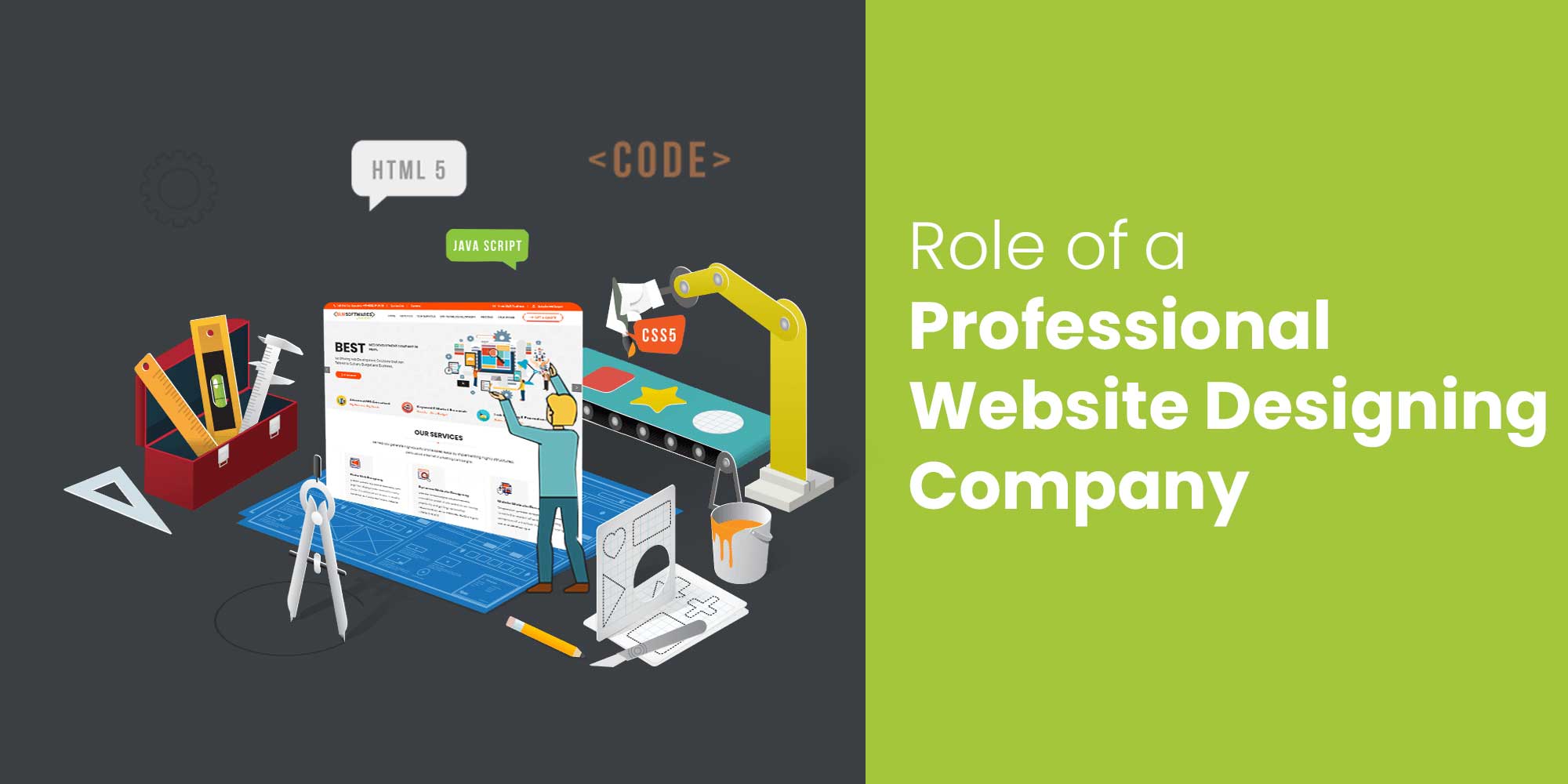

A website design company takes responsibility for turning a business objective into a working website: working out what the site needs to do, structuring it, designing how it looks and behaves, building it, and handing over something the client can run. The visual design most people picture is one phase among seven or eight.
This describes how such a project actually runs, what you should receive at each stage, and — the part that determines whether it goes well — what the client is on the hook for.
Before anything is designed, the team establishes what the site is for. Who uses it, what they are trying to do, what the business needs to happen, what constraints exist, and what the current site already does well.
Expect to be asked uncomfortable questions: who is your actual customer, what do you want someone to do on this site, what happens when an enquiry arrives. Discovery that is a formality produces a site that looks professional and solves nothing.
You should receive: a written summary of goals, audiences and success measures that you recognise as accurate.
Sitemap and information architecture — what pages exist, how they nest, what navigation contains, what things are called. This determines whether people find anything, and it is decided before any visual work.
You should receive: a sitemap and wireframes for key templates, showing content priority without visual styling.
Rather than designing pages one at a time, competent teams build a system first: colour tokens, type scale, spacing scale, and components such as buttons, form fields and cards, each with its states defined.
This is what keeps a site consistent and lets you add pages later without a designer. A project delivering twelve bespoke page layouts and no components will drift within months, because nobody knows what a new page is supposed to look like.
You should receive: a component library with defined states, and documented tokens including the palette.
Templates assembled from the system, designed at more than one screen width. If designs arrive only at desktop width, everything narrower is being left to whoever writes the front-end code.
You should receive: designs for each template at narrow and wide widths, with behaviour notes for anything non-obvious.
Front-end development turns designs into working pages; back-end work handles the CMS, forms, integrations and anything with data behind it. These are genuinely different skills — worth understanding that design and development are different jobs when you are reading a proposal that treats them as one line item.
You should receive: access to a staging site as it comes together, not a reveal at the end.
Copy, images, and everything that goes into the CMS. Sometimes the agency writes it, more often the client supplies it, and the split should be explicit in the contract because ambiguity here delays more projects than any technical problem.
You should receive: a content plan naming who writes what and by when.
Cross-browser and cross-device checking, accessibility review, performance testing, form and integration testing, and proofreading. QA is the phase most often compressed when a project runs late, and it is the phase whose absence shows up publicly.
You should receive: a summary of what was tested and on what, not simply an assurance that it works.
Deployment, DNS, redirects from old URLs, analytics verification, and training so your team can actually use the CMS. Handover is not sending login details — it is making sure someone internally can operate the thing.
You should receive: documentation, training, and confirmation that redirects and tracking work.
On a project of any size, several people are involved, and knowing which one to talk to prevents a lot of friction.
| Role | Responsible for | Talk to them about |
|---|---|---|
| Account or project manager | Schedule, scope, communication | Timelines, changes, anything unclear |
| Strategist or UX lead | Goals, audience, structure | Whether the site does the right job |
| Designer | Layout, components, visual system | How it looks and behaves |
| Front-end developer | Browser-side build, responsive, accessibility | Why something behaves as it does on a device |
| Back-end developer | CMS, forms, integrations, data | Functionality and third-party systems |
| QA | Testing before launch | Bugs and device-specific problems |
In a small agency one person may cover several rows, which is fine. What matters is that each responsibility has an owner. When nobody owns accessibility or performance, they do not get done.
Projects fail on the client side at least as often as the agency side, and usually for the same handful of reasons. Being honest about these before starting is the highest-leverage thing a client can do.
One decision-maker. Design by committee produces compromise. Someone must be empowered to approve, and everyone must agree in advance who that is. Feedback gathered from nine stakeholders with no arbiter turns into contradictory instructions the agency cannot satisfy.
Content, on time. Content is the most common cause of overrun. If you are supplying copy for eighteen pages, that is a real workload with a real owner and a real deadline. Agreeing it will "come later" means the project stalls in build.
Timely feedback. Approval cycles are on the critical path. A week's delay at three review points is three weeks on the schedule.
Access. Domain registrar, DNS, hosting, analytics, existing CMS. Chasing credentials that nobody has kept can add weeks, and this is worth resolving during discovery rather than the week of launch.
Honest constraints. Budget, deadline, internal politics, that one director who must sign off. Concealing constraints does not remove them; it just means they surface late.
Specific feedback. "I don't like it" cannot be acted on. "The headline doesn't say what we do" can. Feedback describing the problem is far more useful than feedback proposing a solution.
The quality of the brief predicts the quality of the outcome more reliably than the size of the budget. Most briefs describe a website; useful briefs describe a problem.
Resist specifying solutions. A brief that says "we want a full-width video hero and a three-column services grid" has skipped the diagnosis and gone straight to prescription — and it removes the value you are paying for. Describe what the page must accomplish and let the people you hired propose how.
Similarly, a list of websites you like is weak input unless you say what specifically you like about each and why it applies to your situation. "Clean and modern" describes almost every site anyone admires and gives a designer nothing to work with.
Both are far cheaper to design in than to retrofit, and both tend to be dropped when they are not written down. Stating that the site must meet WCAG at an agreed level, and must pass Core Web Vitals on mobile, turns two things that are usually hoped for into two things that are specified and testable.
Two of these are worth insisting on because their absence causes the most trouble later. Full access and ownership — you should own the domain, the hosting account, the analytics property and the source. Arrangements where the agency holds the domain create genuine leverage problems if the relationship ends. And redirects, if you are replacing an existing site, since that is where search traffic is lost. The mechanics are covered in planning a redesign.
Discovery skipped to save budget. The decisions still get made, just later and by whoever encounters them, without the context.
Design approved without real content. Layouts built around placeholder text break when the real heading is fourteen words.
Scope growing without acknowledgement. Small additions accumulate. Both sides benefit from naming the process for handling them before the first one arrives.
No agreement on what happens after launch. Who fixes a bug found in week three? Who applies security updates? Settle this before launch, not after.
Accessibility and performance treated as optional extras. Both are much cheaper designed in than retrofitted, and one of them is increasingly a legal question.
The reveal. Agencies that disappear for six weeks and present a finished design are managing their own comfort rather than your risk. Regular, unfinished check-ins produce better outcomes and fewer arguments.
None of these is universally right, and it is worth being honest about the trade-offs rather than assuming an agency is the default.
| Works well when | Struggles when | |
|---|---|---|
| Freelancer | Scope is contained, budget is limited, you can manage the project yourself | The work spans design, front-end and back-end, or continuity matters over years |
| Agency | Multiple disciplines are needed, you want one accountable party, the project has real complexity | Budget is small, or the work is a series of tiny changes |
| In-house | The site changes constantly and is core to the business | You need occasional deep expertise you cannot justify employing full time |
If you need a small brochure site, have no unusual functionality, and are comfortable with a template, a well-chosen theme configured carefully will serve you perfectly well. Paying for custom design to produce something a template would have matched is a real and common waste.
The case for custom work strengthens when the site has a specific job to do that templates do not anticipate, when it must integrate with other systems, when brand differentiation genuinely matters commercially, or when the site is a primary sales channel rather than a brochure.
Proposals from different companies are rarely comparable on price, because they are rarely quoting the same work. A cheaper proposal is often cheaper because it excludes discovery, or delivers page designs rather than a component system, or assumes you write all the content.
Normalise them before comparing. For each proposal, note what it includes against the deliverables list above, and specifically what it does not mention — omissions are where the price difference usually lives. Then ask each company to confirm the gaps in writing.
Two signals worth weighting heavily. A proposal that asks you questions before quoting is engaging with your problem; one that arrives as a fixed package the day after enquiry is selling a template. And a proposal that includes a discovery phase as paid work is being honest that the requirements are not yet known — which is usually more credible than one quoting a precise figure for a project nobody has scoped.
The last one is more revealing than a reference from a project that went smoothly. Every agency has a difficult project; what matters is how they handled it.
Ask the first question carefully, too. Agencies commonly pitch with senior people and deliver with junior ones. That is not automatically a problem — juniors supervised well do good work — but you should know who is actually doing it and who reviews their output, rather than discovering the answer in week three.
Takes a business objective and produces a working website — establishing what the site needs to do, structuring the content, designing a component system and page templates, building the front-end and back-end, testing, launching, and handing over something the client can operate. Visual design is one phase of roughly eight.
A discovery summary, sitemap and wireframes, a component library with defined states, designs at multiple screen widths, a working staging site, accessibility and performance checks, URL redirects if replacing a site, verified analytics, CMS training, and full ownership of the domain, hosting, analytics and source files.
It varies with scope, but the schedule is usually set by content and approvals rather than by design or build. Projects with content owners named at the start and a single decision-maker run substantially faster than projects of identical technical scope without them.
Naming one decision-maker, supplying content on agreed dates, giving feedback promptly and specifically, providing access to domain and hosting accounts, and being honest about budget and constraints. Client-side delays are at least as common a cause of overrun as agency-side ones.
A freelancer suits contained scope and a limited budget, provided you can manage the project. An agency suits work spanning several disciplines where you want one accountable party. For a simple brochure site with no unusual requirements, a carefully configured template may serve you better than either.
A good project is mostly decided before anything is designed: whether discovery was real, whether one person can approve work, and whether content exists. Agencies vary, but the projects that go badly tend to share those three gaps regardless of who was hired.
If you are at the point of commissioning and want to see how we structure this work, our professional website design services page sets out scope, process and what we need from you.
Our 4.8 average client rating is built on delivering the results we promise. From SEO rankings and lead generation to web development and paid marketing, our clients across 40+ countries have shared their experience publicly.
4.8

Digital Marketing and SEO Agency Reviews about SIB Infotech


Rupesh Maniar
Real Value Finloan Services Pvt. Ltd.
SIB Infotech has designed website for our company. We are very happy with outcome. They are not only professional but also putting their heart into work. We will always refer them for quality work and perfect price.
Reviewed From


Tima Elhajj
CEO & Founder, Tima Media
The client loved the platform that the SIB Infotech team developed for them, especially the calculator function. The company appreciated the team's high level of professionalism, communication, and care on the project. They are happy and willing to work with the team again.
Reviewed From