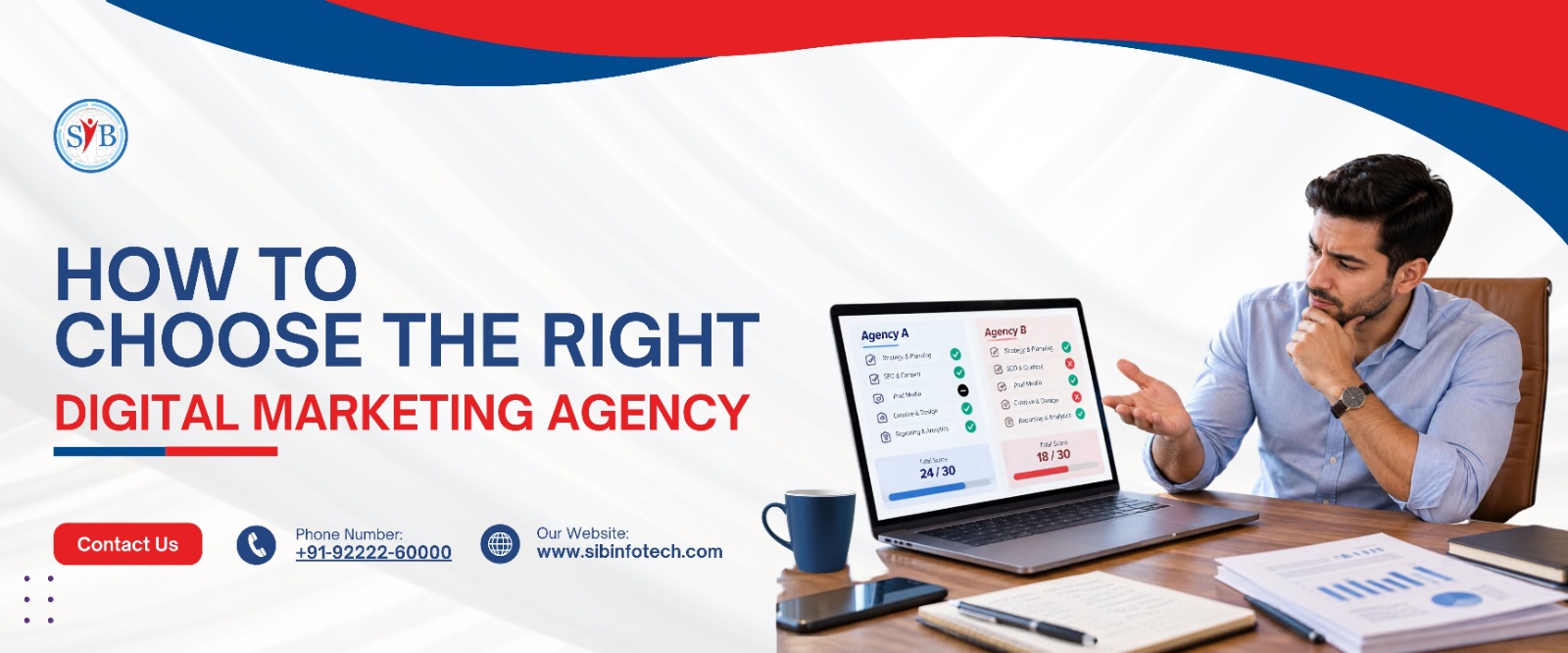
How to Choose the Right Digital Marketing Agency for Your Business
.webp&w=3840&q=100)
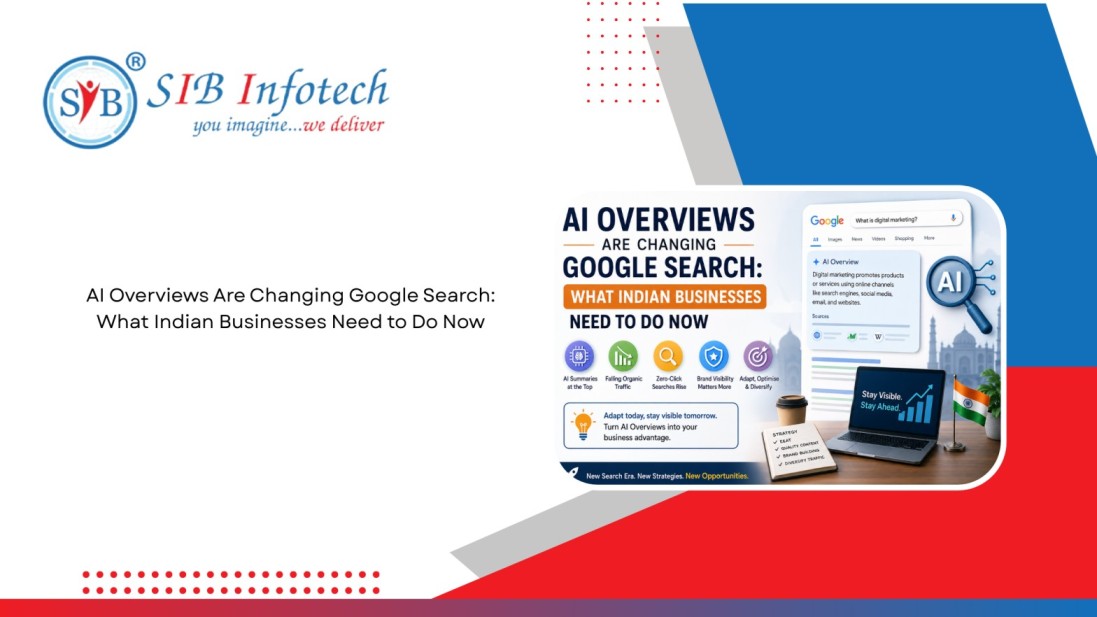

Imagine spending months building your website’s SEO, ranking on the first page of Google, and suddenly watching your organic traffic drop, not because your content got worse, but because Google now answers the question before anyone clicks on your link. That’s the reality of AI Overviews, and for Indian businesses, understanding this shift isn’t optional anymore.
Google’s AI Overviews (formerly known as Search Generative Experience or SGE) are now appearing in Indian search results, and they’re fundamentally changing how people interact with search. In this guide, we’ll break down what AI Overviews are, how they affect your business, and, most importantly, what you can do right now to stay visible.
To effectively optimize for AI Overviews (AIO), we must first understand the underlying technology. Google does not simply run a standard Large Language Model (LLM) like Gemini over the live web in real-time—doing so would be computationally expensive, slow, and prone to severe hallucinations. Instead, Google utilizes a sophisticated hybrid architecture known as Retrieval-Augmented Generation (RAG).
When a user inputs a query, the system executes a multi-stage process:
Pro-Tip from the SIB Infotech Strategy Team:
AI Overviews do not replace the web index; they sit on top of it. If your website lacks strong domain authority, clean HTML structure, and rapid page speed, it will be filtered out during the initial "Information Retrieval" phase, long before the LLM even processes the query.
The deployment of AI Overviews in India presents a unique set of challenges and opportunities that differ significantly from Western markets. The Indian digital ecosystem is defined by three major characteristics:
Indian internet users rarely search using pure, formal English or formal Hindi. Instead, they use "Hinglish"—a colloquial blend of both languages written in the Latin script (e.g., "best budget smartphone kaunsa hai" or "car insurance renew kaise karein").
Google’s AI models have been heavily trained on Indian multilingual datasets to understand this code-switching. To capture these queries, your content strategy must incorporate natural, conversational phrasing that mirrors how everyday Indians speak and search.
With affordable mobile data, voice search has exploded across Tier 2, Tier 3, and rural India. Voice queries are naturally longer, more conversational, and structured as full questions rather than fragmented keywords. AI Overviews are highly optimized to answer these voice-driven, long-tail queries directly, making conversational optimization a top priority for brands.
Whether looking for a "modular kitchen manufacturer in Mumbai" or a "tax consultant near me," Indian consumers demand hyper-local accuracy. AI Overviews integrate Google Maps and local business listings directly into the generative response, meaning local SEO and structured data are more critical than ever.
To survive this transition, businesses must evolve their playbook from traditional Search Engine Optimization (SEO) to Generative Engine Optimization (GEO). While traditional SEO focuses on ranking blue links on a page, GEO focuses on ensuring your brand’s insights, data, and solutions are synthesized and cited by AI engines.
| Optimization Metric | Traditional SEO | Generative Engine Optimization (GEO) |
|---|---|---|
| Primary Target | Search engine crawlers and keyword-based ranking algorithms. | Large Language Models (LLMs), semantic search vectors, and RAG pipelines. |
| Content Structure | Long-form articles, keyword-optimized headings (H2/H3), and keyword density. | Highly structured Q&A formats, direct answers, bulleted summaries, and high "Information Gain." |
| Technical Focus | XML sitemaps, robots.txt, basic meta tags, and URL structures. | Advanced JSON-LD Schema, Entity Resolution, API-driven content delivery, and rapid rendering. |
| Authority Signals | Backlink quantity, anchor text optimization, and PageRank. | Brand mentions across authoritative platforms, digital PR, expert citations, and E-E-A-T. |
| Success Metric | Organic keyword rankings, impressions, and organic CTR. | AI Overview citation share, brand sentiment in LLM outputs, and referral traffic from AI links. |
To protect your organic traffic and ensure your business thrives in this new search era, you must implement a proactive, technically rigorous strategy. Here is the definitive 7-step blueprint designed by SIB Infotech’s lead strategists.
Google has filed patents specifically around "Information Gain Score." In simple terms, if your content merely regurgitates what is already on the top 10 ranking pages, Google's AI has no incentive to cite your website. The AI model wants to synthesize unique viewpoints, fresh statistics, and proprietary insights.
Action Plan:
Search engines no longer just read strings of text; they map entities (people, places, concepts, organizations, and products) and the relationships between them. To help Google's Knowledge Graph connect your brand to relevant topics, you must speak its native language: structured data.
By deploying comprehensive schema markup, you make it incredibly easy for the RAG pipeline to extract precise facts from your site. Refer to the W3C Semantic Web standards to understand how structured data builds a machine-readable web.
Action Plan:
Organization, Product, FAQPage, Article, and LocalBusiness schemas.sameAs property in your schema to link your brand to verified external entities (such as your official social media profiles, Wikipedia pages, or Crunchbase listings).AI Overviews are highly responsive to direct questions. If your content is structured to answer specific questions clearly and concisely, the likelihood of being pulled into the generative summary increases dramatically.
Action Plan:
Google’s Quality Rater Guidelines place immense emphasis on E-E-A-T, particularly for "Your Money or Your Life" (YMYL) sectors like finance, healthcare, and legal services. Because AI Overviews can amplify information, Google applies incredibly strict filtering to ensure it only cites highly trustworthy sources.
Action Plan:
To win in the Indian market, you must look beyond English. Google is actively expanding its regional language support in India. If your business can provide high-quality, localized content, you can capture a massive, under-optimized segment of generative search traffic.
Action Plan:
hreflang tags correctly to point Google to the appropriate language versions of your pages.Our 4.8 average client rating is built on delivering the results we promise. From SEO rankings and lead generation to web development and paid marketing, our clients across 40+ countries have shared their experience publicly.
4.8

Digital Marketing and SEO Agency Reviews about SIB Infotech


Rupesh Maniar
Real Value Finloan Services Pvt. Ltd.
SIB Infotech has designed website for our company. We are very happy with outcome. They are not only professional but also putting their heart into work. We will always refer them for quality work and perfect price.
Reviewed From


Tima Elhajj
CEO & Founder, Tima Media
The client loved the platform that the SIB Infotech team developed for them, especially the calculator function. The company appreciated the team's high level of professionalism, communication, and care on the project. They are happy and willing to work with the team again.
Reviewed From