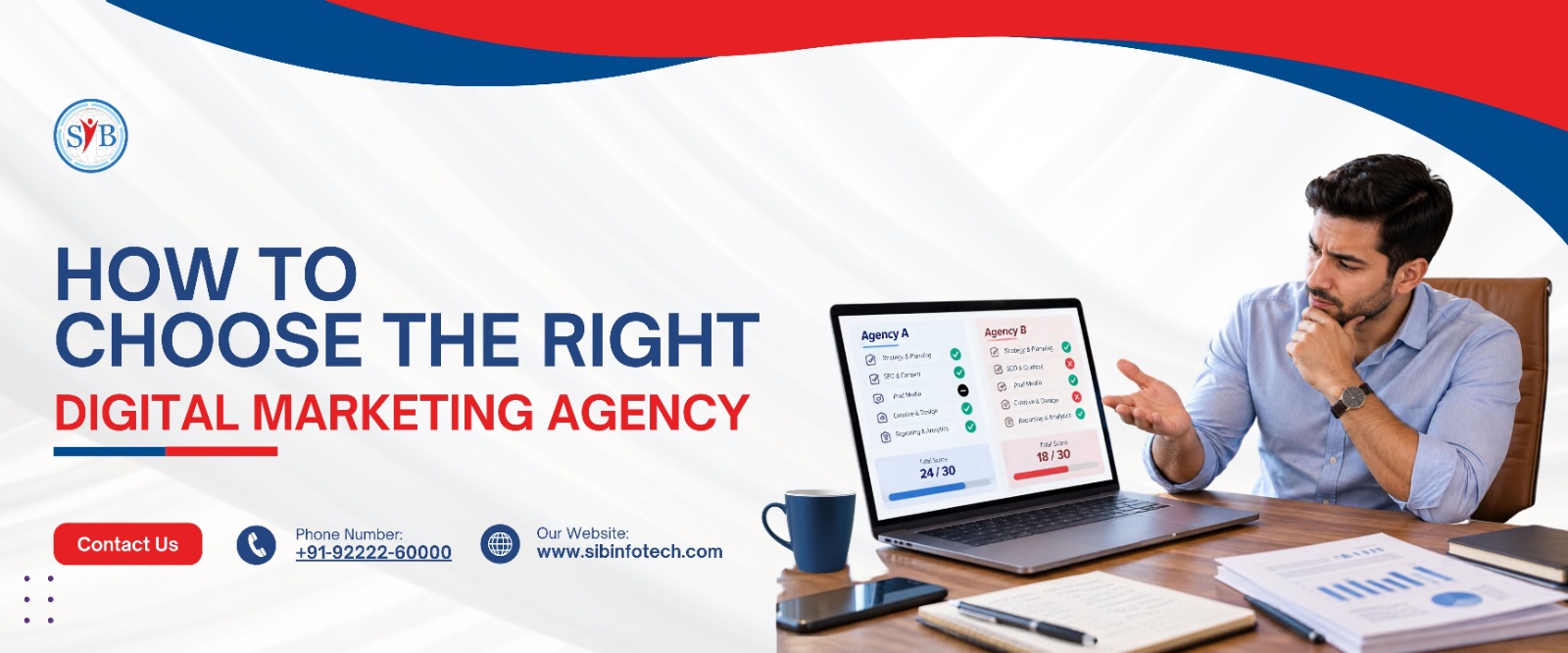
How to Choose the Right Digital Marketing Agency for Your Business
.webp&w=3840&q=100)

<p class="mb-2">
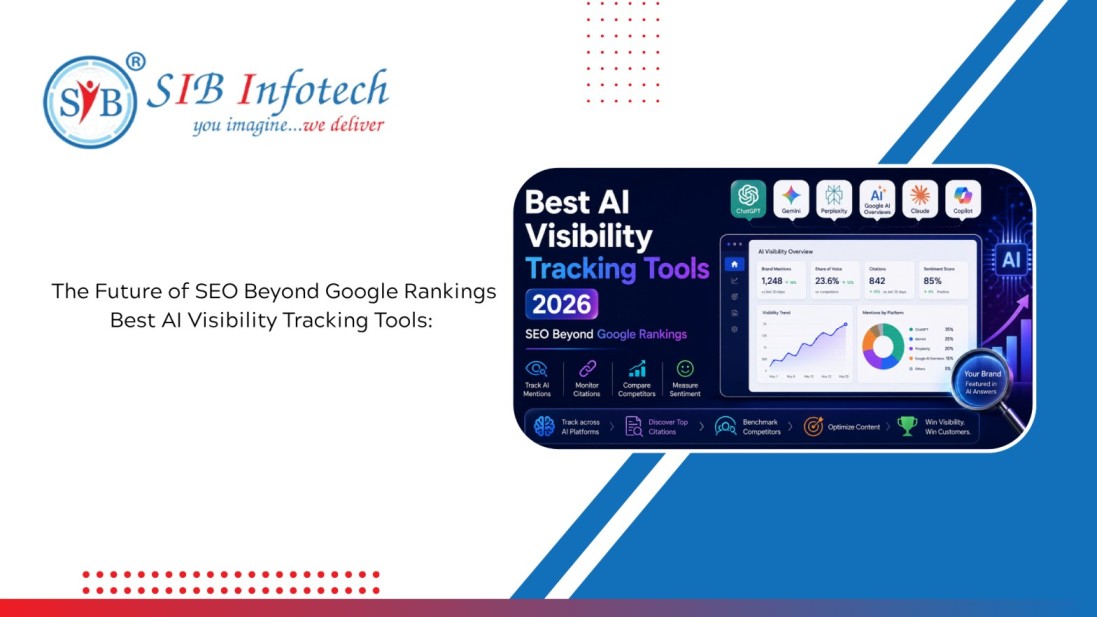
    For nearly two decades, SEO success had one simple measuring stick. Rank on page one of Google, get traffic, win the day. That equation worked because search behavior was predictable. People typed a query, scanned ten blue links, clicked one or two, and moved on. The picture in 2026 looks completely different. Buyers now ask ChatGPT for product recommendations, run research inside Perplexity, let Gemini handle entire shopping decisions, and read AI Overviews on Google before ever scrolling to organic results. This shift has made the best ai visibility tracking tools a serious requirement for brands that want to stay discoverable. If an AI assistant never mentions your business, a large chunk of your audience may never know you exist.
</p>

<p class="mb-0">
    This blog walks through why AI visibility tracking matters, how it differs from old-school rank tracking, what features to look for in a tool, and which platforms are worth considering in 2026.
</p>

<div style="background: linear-gradient(135deg, #f8fafc 0%, #eff6ff 100%); border: 1px solid #dbeafe; border-left: 5px solid #2563eb; border-radius: 12px; padding: 24px 28px; margin: 32px 0;">
  <h3 style="color: #1e3a8a; font-size: 20px; font-weight: 700; margin-top: 0; margin-bottom: 12px;">Executive Summary & Key Takeaways</h3>
  <ul style="margin-bottom: 0; padding-left: 20px; color: #334155; line-height: 1.6;">
    <li><strong>The End of the Ten Blue Links:</strong> Generative search and conversational AI engines synthesize answers directly, bypassing traditional click-through journeys.</li>
    <li><strong>Shift from SEO to GEO:</strong> Brands must transition from optimizing for keyword rankings to optimizing for Large Language Model (LLM) citations, semantic context, and recommendation engines via <a href="/generative-engine-optimization">Generative Engine Optimization (GEO)</a>.</li>
    <li><strong>Metric Transformation:</strong> Traditional rank trackers are obsolete for AI. Visibility is now measured by share of model, citation frequency, sentiment, and contextual association.</li>
    <li><strong>Actionable Tool Stack:</strong> Modern marketers require specialized software to audit prompt responses across ChatGPT, Claude, Perplexity, Gemini, and Google AI Overviews.</li>
  </ul>
</div>

<h2 style="font-size: 26px; font-weight: 700; color: #0f172a; margin-top: 40px; margin-bottom: 16px;">The Paradigm Shift: Why Traditional Rank Trackers Are Failing</h2>

<p>For years, digital marketing strategies relied heavily on tools that monitored keyword positions in the Google SERP. If you ranked #3 for a high-volume transactional keyword, you could reasonably project traffic, conversions, and revenue based on historical click-through rate (CTR) curves. Today, that predictive model is fractured. When a user queries "What are the best enterprise inventory management tools?", Google's AI Overviews or a Perplexity search does not just list ten links—it generates a cohesive, synthesized narrative, naming three specific software suites, summarizing their pros and cons, and providing citation links buried deep inside footnotes or conversational sidebars.</p>

<p>This structural change in how information is retrieved has transformed discovery. Users rarely scroll past the generated block if their immediate intent is satisfied. Consequently, a brand can hold a #1 position in organic web listings while remaining completely invisible inside the generative output that sits above it. To combat this, organizations are partnering with firms specializing in comprehensive <a href="/digital-marketing-services">digital marketing services</a> to restructure their online presence for zero-click generative environments.</p>

<p>Understanding this transition requires looking closely under the hood of Large Language Models (LLMs) and Retrieval-Augmented Generation (RAG) architectures. Unlike deterministic keyword crawlers that index exact-match phrases, modern AI models rely on vector embeddings, semantic proximity, and continuous training data updates or real-time web retrieval. Measuring your footprint in this ecosystem demands a fundamentally new category of software: AI visibility tracking tools.</p>

<h2 style="font-size: 26px; font-weight: 700; color: #0f172a; margin-top: 40px; margin-bottom: 16px;">Anatomy of AI Search: How LLMs and RAG Determine Visibility</h2>

<p>To evaluate tracking tools effectively, you must first understand what they are measuring. AI search engines and answer engines do not "rank" web pages in the traditional sense. Instead, they ingest millions of tokens, evaluate semantic relevance, and generate unique, context-dependent answers on the fly. This process relies on two primary mechanisms:</p>

<h3 style="font-size: 20px; font-weight: 600; color: #1e293b; margin-top: 24px; margin-bottom: 12px;">1. Parametric Memory and Pre-training</h3>
<p>Models like OpenAI’s GPT-4o, Anthropic’s Claude 3.5 Sonnet, and Google’s Gemini possess vast parametric memories acquired during their initial training phases. If your brand is deeply embedded in the training corpus—frequently cited across authoritative industry publications, developer forums, Wikipedia, and high-tier news outlets—the model has an intrinsic bias toward recommending you.</p>

<h3 style="font-size: 20px; font-weight: 600; color: #1e293b; margin-top: 24px; margin-bottom: 12px;">2. Retrieval-Augmented Generation (RAG)</h3>
<p>Engines like Perplexity, Microsoft Copilot, and Google AI Overviews do not rely solely on memory; they actively query live web indices in real-time when a user asks a question. They scrape top-ranking documents, extract key entities, and synthesize a response while attributing sources. Achieving visibility here requires a blend of stellar <a href="/technical-seo-services">technical seo services</a>—ensuring rapid crawlability, clean semantic HTML, and structured data markup—alongside robust digital PR.</p>

<blockquote style="background: #f8fafc; border-left: 4px solid #2563eb; margin: 24px 0; padding: 16px 20px; font-style: italic; color: #475569;">
  "Traditional SEO asked: 'Does Google index my page?' Generative Engine Optimization asks: 'Do foundational LLMs and RAG pipelines cite my brand as the definitive authority when answering user prompts?'"
  <div style="margin-top: 8px; font-style: normal; font-weight: 600; font-size: 14px; color: #1e293b;">— SIB Infotech Technical Strategy Group</div>
</blockquote>

<h2 style="font-size: 26px; font-weight: 700; color: #0f172a; margin-top: 40px; margin-bottom: 16px;">Core Metrics Tracked by Advanced AI Visibility Platforms</h2>

<p>Unlike standard rank trackers that output a simple integer (e.g., Rank 4), AI visibility trackers must parse unstructured conversational text to extract quantitative insights. When shopping for these tools, look for platforms that report on the following critical metrics:</p>

<ul style="margin-bottom: 24px; padding-left: 20px; color: #334155; line-height: 1.7;">
  <li><strong>Share of Model (SoM):</strong> The percentage of times your brand or product is recommended across a targeted prompt matrix compared to your top competitors.</li>
  <li><strong>Citation Frequency & Domain Authority Attribution:</strong> How often the AI links directly to your domain versus a competitor or third-party review site when answering prompts.</li>
  <li><strong>Sentiment Analysis:</strong> Whether the AI speaks about your brand in a positive, neutral, or critical tone. A model might mention you frequently, but if it highlights critical security flaws, high visibility hurts rather than helps.</li>
  <li><strong>Prompt-Level Ranking and Position:</strong> In structured lists generated by AI (e.g., "Top 5 CRM platforms"), being mentioned first carries significantly higher psychological weight than being listed fifth.</li>
  <li><strong>Attribute Association:</strong> What specific features, pricing models, or use cases do AI engines associate with your brand? (e.g., Does ChatGPT think your software is "affordable" or "enterprise-grade"?).</li>
</ul>

<h2 style="font-size: 26px; font-weight: 700; color: #0f172a; margin-top: 40px; margin-bottom: 16px;">Comparative Breakdown of Leading AI Visibility Tools</h2>

<p>The market for AI tracking software has matured rapidly. Below is an analytical breakdown comparing the core capabilities, ideal use cases, and target models monitored by top platforms in the space.</p>

<div style="overflow-x: auto; margin: 32px 0;">
  <table style="width: 100%; border-collapse: collapse; text-align: left; font-size: 14px; color: #334155;">
    <thead>
      <tr style="background: #1e3a8a; color: #ffffff;">
        <th style="padding: 12px 16px; border: 1px solid #cbd5e1;">Tool Category / Name</th>
        <th style="padding: 12px 16px; border: 1px solid #cbd5e1;">Primary Focus</th>
        <th style="padding: 12px 16px; border: 1px solid #cbd5e1;">Models Covered</th>
        <th style="padding: 12px 16px; border: 1px solid #cbd5e1;">Standout Feature</th>
      </tr>
    </thead>
    <tbody>
      <tr style="background: #f8fafc;">
        <td style="padding: 12px 16px; border: 1px solid #cbd5e1; font-weight: 600;">Enterprise LLM Trackers</td>
        <td style="padding: 12px 16px; border: 1px solid #cbd5e1;">Brand sentiment & prompt share of voice across multi-LLM networks.</td>
        <td style="padding: 12px 16px; border: 1px solid #cbd5e1;">GPT-4o, Claude 3.5, Gemini Pro, Llama 3</td>
        <td style="padding: 12px 16px; border: 1px solid #cbd5e1;">Simulated buyer persona prompt scaling & deep sentiment graphs.</td>
      </tr>
      <tr>
        <td style="padding: 12px 16px; border: 1px solid #cbd5e1; font-weight: 600;">RAG & SERP Hybrid Tools</td>
        <td style="padding: 12px 16px; border: 1px solid #cbd5e1;">Google AI Overviews & Perplexity citation tracking.</td>
        <td style="padding: 12px 16px; border: 1px solid #cbd5e1;">Google SGE, Perplexity, Copilot</td>
        <td style="padding: 12px 16px; border: 1px solid #cbd5e1;">Direct correlation between traditional SERP rankings and AI snapshot inclusions.</td>
      </tr>
      <tr style="background: #f8fafc;">
        <td style="padding: 12px 16px; border: 1px solid #cbd5e1; font-weight: 600;">Custom Python/API Scrapers</td>
        <td style="padding: 12px 16px; border: 1px solid #cbd5e1;">In-house proprietary tracking and bespoke data aggregation.</td>
        <td style="padding: 12px 16px; border: 1px solid #cbd5e1;">Custom API integrations across all major LLM endpoints</td>
        <td style="padding: 12px 16px; border: 1px solid #cbd5e1;">Complete data ownership and zero SaaS overhead costs.</td>
      </tr>
    </tbody>
  </table>
</div>

<p>When selecting a platform, brands must align their tool choice with their broader digital strategy. Businesses scaling user acquisition via paid channels often integrate visibility insights alongside <a href="/google-ads-management-services">Google Ads management services</a> to ensure that paid search captures demand while AI visibility drives organic conversational authority.</p>

<h2 style="font-size: 26px; font-weight: 700; color: #0f172a; margin-top: 40px; margin-bottom: 16px;">How to Build an AI Visibility Tracking Workflow</h2>

<p>Purchasing software is only half the battle. To extract real ROI, digital marketing teams must implement a structured, repeatable framework. Here is a step-by-step roadmap for establishing a world-class AI visibility auditing process:</p>

<ol style="margin-bottom: 24px; padding-left: 20px; color: #334155; line-height: 1.8;">
  <li><strong>Define Your Buyer Intent Prompt Matrix:</strong> Do not just track brand names. Build a matrix of 100+ natural-language conversational queries your target buyers use during each stage of the funnel (e.g., <em>"What is the best alternative to X software for mid-market logistics?"</em>).</li>
  <li><strong>Establish Baseline Visibility Scores:</strong> Run your prompt matrix across ChatGPT, Perplexity, Gemini, and Claude. Document your current Share of Model, citation URLs, and associated brand attributes.</li>
  <li><strong>Audit Structural and Semantic Gaps:</strong> Analyze why competitors are winning specific citations. Are they featured on authoritative industry round-up lists (G2, Capterra, TechCrunch)? Do they utilize cleaner schema markup that RAG engines can easily parse?</li>
  <li><strong>Execute Generative Engine Optimization (GEO):</strong> Optimize your web properties by updating structured data, earning high-authority digital PR mentions, and creating comprehensive, deeply detailed content assets that answer complex multi-faceted questions directly.</li>
  <li><strong>Continuous Monitoring and Iteration:</strong> LLMs update their training weights and retrieval indexes constantly. Run automated weekly tracking cycles to measure how algorithm updates affect your brand sentiment and citation share.</li>
</ol>

<h2 style="font-size: 26px; font-weight: 700; color: #0f172a; margin-top: 40px; margin-bottom: 16px;">The Technical Foundation Required for AI Discoverability</h2>

<p>Even the most advanced tracking tools will report poor visibility if your underlying digital infrastructure is hostile to AI agents and web crawlers. Modern search optimization requires robust <a href="/website-development-services">web development solutions</a> that prioritize machine-readable data architecture.</p>

<p>Key technical imperatives for winning AI citations include:</p>

<ul style="margin-bottom: 24px; padding-left: 20px; color: #334155; line-height: 1.7;">
  <li><strong>Advanced Schema Markup:</strong> Utilizing comprehensive JSON-LD structured data (`Organization`, `Product`, `FAQPage`, `Article`, and `Review`) to explicitly define your brand entities, relationships, and product specifications for LLM crawlers.</li>
  <li><strong>Semantic HTML Hierarchy:</strong> Ensuring proper use of semantic tags (`<article>`, `<section>`, `<header>`, `<h1>` through `<h1>`) so that RAG scrapers accurately segment and index contextual content blocks.</li>
  <li><strong>Lightning-Fast Server Response Times:</strong> Real-time retrieval crawlers (like PerplexityBot or GPTBot) operate under tight timeout constraints. Slow server rendering or heavy JavaScript reliance can cause your pages to be skipped during live RAG queries.</li>
  <li><strong>Immaculate UX and Visual Design:</strong> Partnering with experts in <a href="/website-designing-services">custom website designing services</a> to ensure clean typography, accessible layouts, and zero intrusive pop-ups that degrade readability scores evaluated by automated evaluation models.</li>
</ul>

<p>For further technical guidance on how search engines interpret modern web standards, consult <a href="https://developers.google.com/search" target="_blank" rel="noopener noreferrer">Google Search Central Documentation</a> and the web architecture standards maintained by the <a href="https://www.w3.org/" target="_blank" rel="noopener noreferrer">World Wide Web Consortium (W3C)</a>.</p>

<h2 style="font-size: 26px; font-weight: 700; color: #0f172a; margin-top: 40px; margin-bottom: 16px;">The Future of Digital Discovery: Staying Ahead of the Curve</h2>

<p>The transition from keyword-driven search to conversational AI discovery is permanent. Brands that cling exclusively to traditional rank tracking will find themselves flying blind as traffic shifts toward zero-click generative summaries. Implementing specialized AI visibility tracking tools allows marketing leaders to quantify their brand health, monitor competitor dominance, and fine-tune their optimization strategies for the era of generative engines.</p>

<p>As digital ecosystems continue to evolve, maintaining an authoritative footprint requires a holistic strategy that merges technical excellence, strategic PR, and data-driven GEO. By mastering AI visibility tracking today, your brand secures its place as the definitive, trusted answer in tomorrow's digital marketplace.</p>Our 4.8 average client rating is built on delivering the results we promise. From SEO rankings and lead generation to web development and paid marketing, our clients across 40+ countries have shared their experience publicly.
4.8

Digital Marketing and SEO Agency Reviews about SIB Infotech


Rupesh Maniar
Real Value Finloan Services Pvt. Ltd.
SIB Infotech has designed website for our company. We are very happy with outcome. They are not only professional but also putting their heart into work. We will always refer them for quality work and perfect price.
Reviewed From


Tima Elhajj
CEO & Founder, Tima Media
The client loved the platform that the SIB Infotech team developed for them, especially the calculator function. The company appreciated the team's high level of professionalism, communication, and care on the project. They are happy and willing to work with the team again.
Reviewed From