Is Your Website Affected by the New PHP Vulnerability? Check Now
.webp&w=3840&q=100)

Something strange happened last year. A friend of mine stopped using Google for product research. She told me, "I just ask ChatGPT now. It gives me straight answers."
Every day, millions of people are skipping Google and typing their questions directly into ChatGPT, Perplexity AI, or Google's own AI tools like Google Gemini. They are not looking for a list of blue links anymore. They want a direct answer. Right now. In plain English.
This is not a small shift. This is a fundamental change in how people find information online. And if you run a business, it affects how your customers find you.
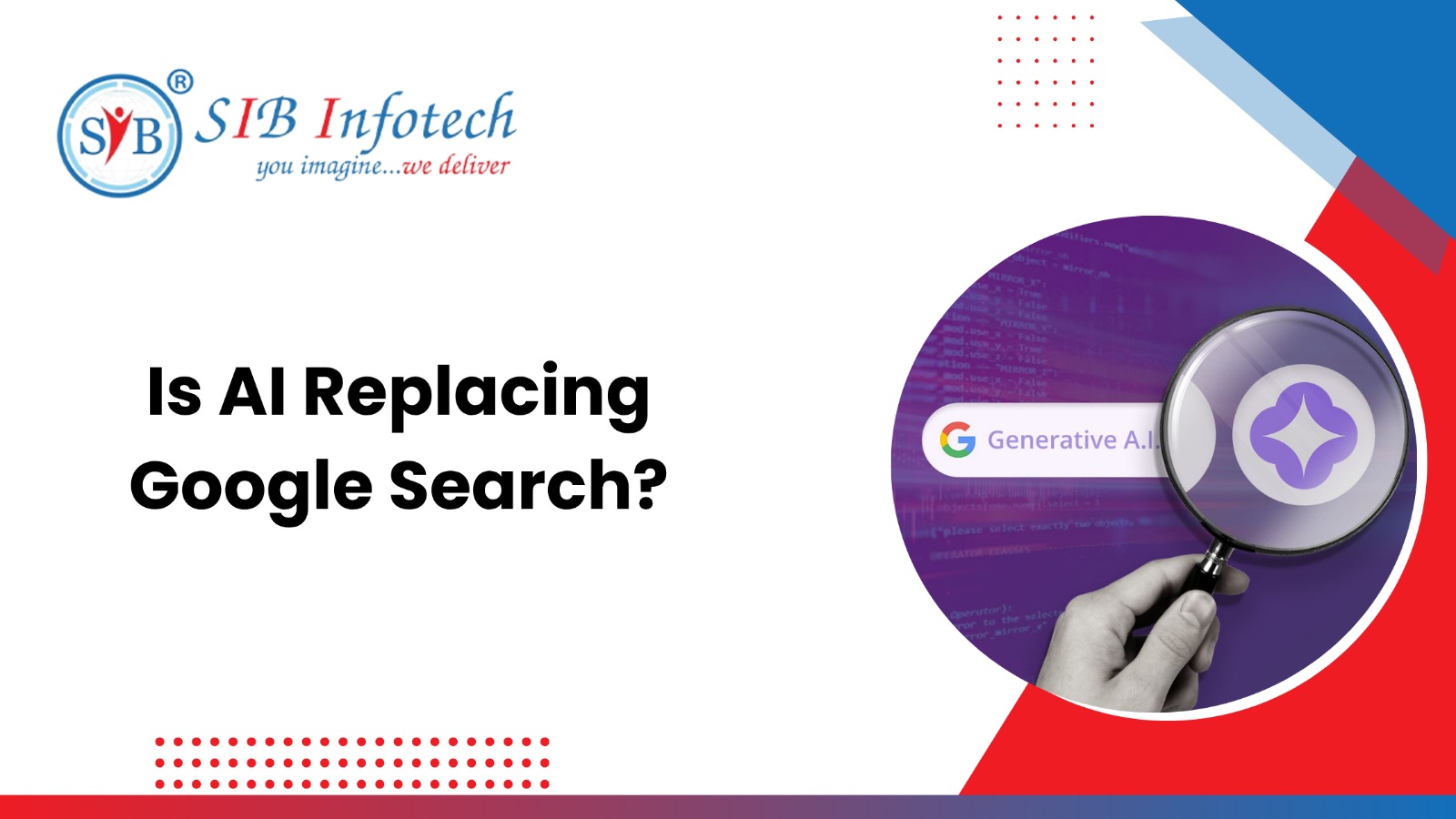
The narrative that "AI is replacing Google" oversimplifies a more nuanced shift. What's actually happening is that specific categories of search — open-ended research questions, product comparisons, "how does X work" explanations — are increasingly starting in an AI assistant rather than a search engine, because conversational AI genuinely handles these query types better: synthesizing information from multiple sources into one direct, tailored answer. Transactional searches ("book a flight," "order pizza near me") and local searches remain much more anchored to traditional search and maps, where immediate action, real-time inventory, and location matter more than synthesized explanation.
When a user is trying to understand a topic, compare options, or get a nuanced explanation, the traditional search experience of opening multiple tabs, reading several pages, and synthesizing the information themselves is genuinely more effortful than asking an AI assistant to do that synthesis directly. This is precisely the category of query where AI assistants have captured meaningful share — not because Google's index got worse, but because the AI experience is a better fit for that specific job to be done.
Pro Tip: Audit your own search behavior for a week. Note which queries you now default to an AI assistant for versus which you still open Google for. Your own behavior is a useful proxy for how your customers are likely splitting their search behavior too.
| Query Type | Still Favors Google | Increasingly Favors AI Assistants |
|---|---|---|
| "Best restaurant near me" | Yes | No |
| "X vs Y, which is better for..." | No | Yes |
| "Buy [specific product]" | Yes | No |
| "Explain how X works" | No | Yes |
The practical response isn't to abandon traditional SEO — local and transactional search still depend heavily on it — but to add a parallel effort focused on being cited within AI-generated answers for the research and comparison queries your prospective customers are increasingly asking before they ever reach a transactional search. This means structuring content to directly and clearly answer comparison and explanatory questions, not just optimizing for keyword ranking.
AI isn't replacing Google search wholesale — it's capturing a specific, growing share of research and comparison-phase queries while traditional search remains dominant for local and transactional intent. The businesses that adapt fastest are the ones building visibility in both worlds simultaneously rather than betting entirely on one. Our Generative Engine Optimization (GEO) service is built specifically to close the AI-citation gap, while our broader SEO services keep the transactional and local side of your visibility strong at the same time.
Our 4.8 average client rating is built on delivering the results we promise. From SEO rankings and lead generation to web development and paid marketing, our clients across 40+ countries have shared their experience publicly.
4.8

Digital Marketing and SEO Agency Reviews about SIB Infotech


Rupesh Maniar
Real Value Finloan Services Pvt. Ltd.
SIB Infotech has designed website for our company. We are very happy with outcome. They are not only professional but also putting their heart into work. We will always refer them for quality work and perfect price.
Reviewed From


Tima Elhajj
CEO & Founder, Tima Media
The client loved the platform that the SIB Infotech team developed for them, especially the calculator function. The company appreciated the team's high level of professionalism, communication, and care on the project. They are happy and willing to work with the team again.
Reviewed From