
Best AI Video Tools for Ecommerce & Product Marketing (2024 Guide)
.webp&w=3840&q=100)

You spend money on ads. Your SEO is finally pulling visitors. Google Analytics shows the numbers going up every month. But the phone stays quiet and your inbox has no real inquiries.
This is a common problem for business owners across India. The website gets visitors, but those visitors leave without filling a form, calling, or chatting. Traffic alone does not pay bills. Leads do.
This guide breaks down how to convert website visitors into leads using small, practical changes any business can apply. It covers the real reasons for the website traffic but no leads situation, what your visitors actually want, and the exact steps to fix engagement, calls, and conversion rates.
Most of these fixes do not need a website redesign. They need clearer thinking about what the visitor sees, feels, and is asked to do.
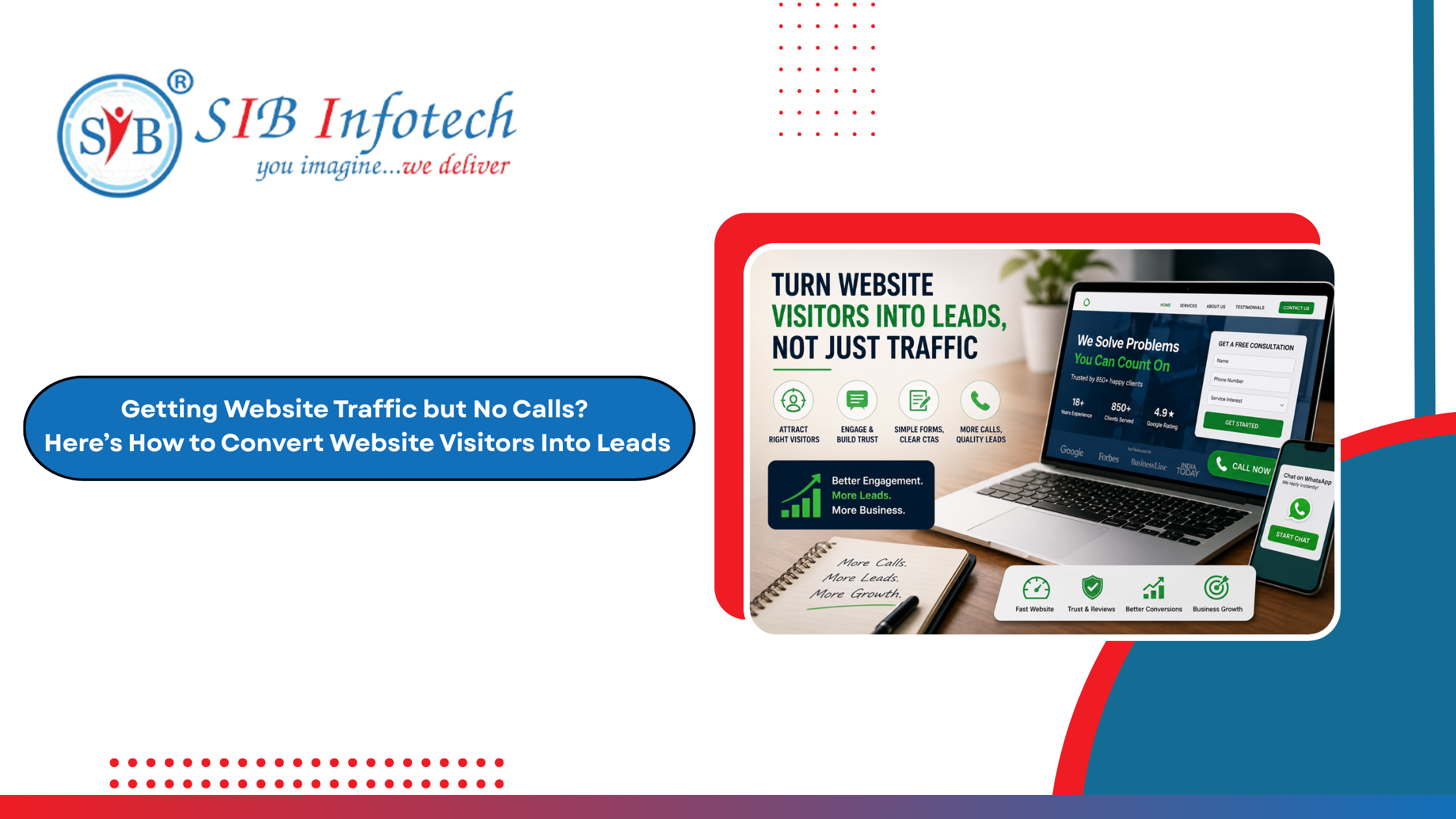
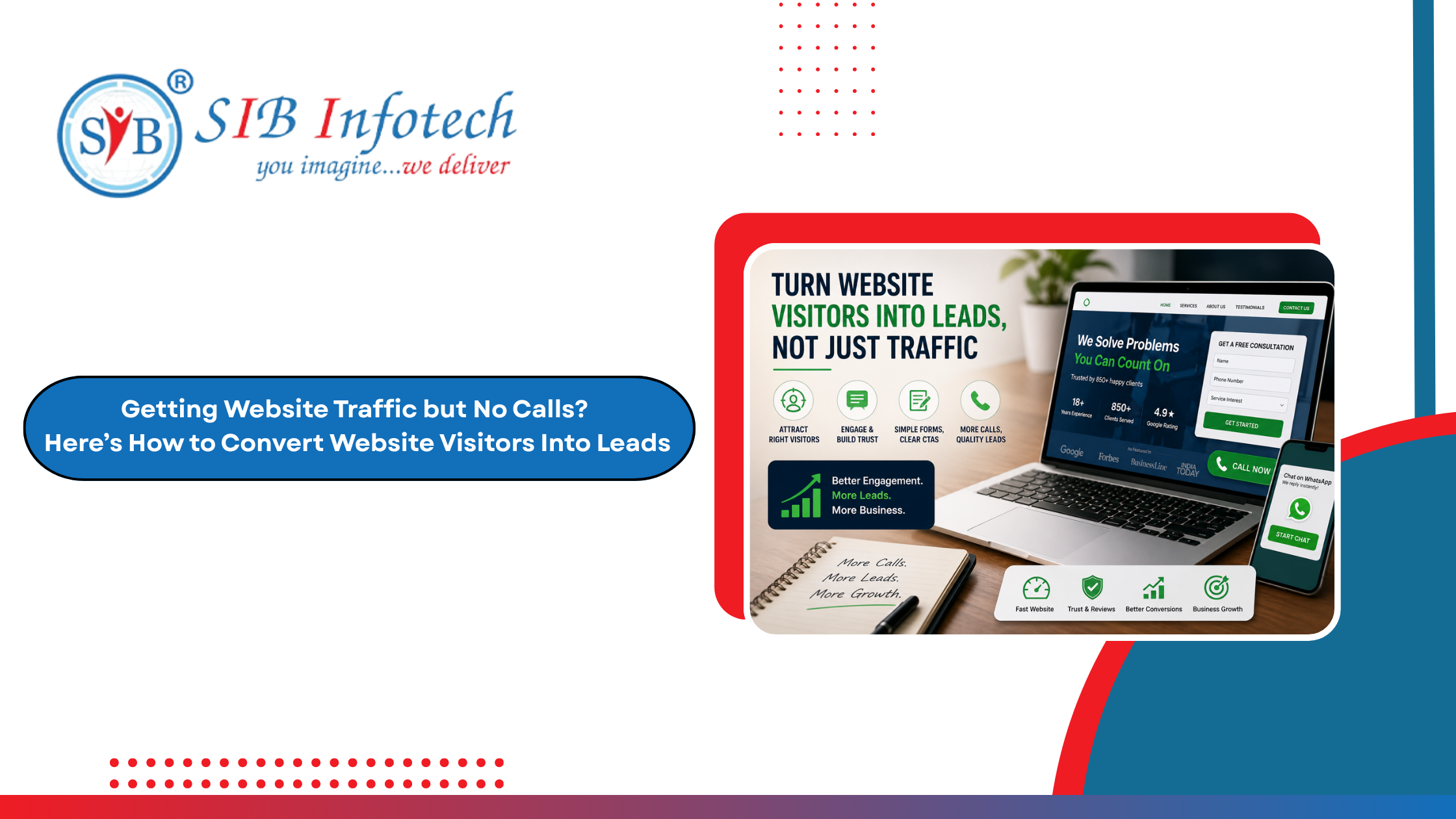
To turn website visitors into inquiries, fix five things first. Make the value clear in two seconds. Speed up the page. Use one obvious call to action per page. Keep forms short with three fields. Show trust signals like reviews and client logos. Add a sticky call button on mobile and a WhatsApp chat widget. Then respond to every inquiry within five minutes for the best chance of closing.
A website with traffic but no inquiries usually has one or more of these issues.
The visitor lands on the page and cannot quickly tell what you do, who you serve, or why you are different. The page loads slowly on mobile, so they bounce before reading anything. The call to action is buried below the fold or written in vague words like "Submit" or "Learn More." The contact form asks for too many fields. There are no reviews, ratings, or trust signals to make the visitor feel safe.
Sometimes the issue is wrong-fit traffic. If your ads or SEO are pulling people who are not ready to buy, they will read and leave. That is not a conversion problem. That is a targeting problem.
The website traffic but no leads pattern also happens when the page focuses only on features and ignores buyer intent. Visitors come with a question or a problem. If the page does not address that problem in the first few seconds, they hit back. Fixing this starts with auditing both the traffic source and the page itself.
Most business owners try to fix conversions without knowing where the drop-offs happen. That is guesswork.
Install Microsoft Clarity or Hotjar. Both have free plans. These tools show heatmaps and session recordings. You will see exactly where visitors scroll, what they click, where their cursor hovers, and when they leave. You will see if your CTA button is being ignored, if visitors get stuck on a section, or if mobile users cannot tap your phone number.
Pair this with GA4. Look at the landing page report. Find pages with high traffic but low engagement time. Those are your weak spots.
Also map your customer journey. A first-time visitor from Google is not the same as a returning visitor who came from your Instagram bio link. Each one needs a different next step. The first wants information. The second is closer to buying and needs proof.
This homework takes a few hours. It saves weeks of testing the wrong fixes.
Engagement is the bridge between visit and lead. If visitors do not engage, they do not convert. Here is how to improve website engagement in ways that actually work for Indian SME websites.
A page that takes more than three seconds to load on mobile loses about half its visitors. Compress your images so they are smaller in file size. Set images to load only when the visitor scrolls down to them. Switch to a faster hosting provider if your current one is slow to respond. Test your site for free on Google PageSpeed Insights and fix whatever shows up in red.
Indians on mobile scroll fast. Long paragraphs do not work. Use short lines, clear subheadings, bullet points, and bold the key benefit in each section. Add small icons or images that break up the text.
A simple calculator (loan EMI, project cost, ROI estimator), a quiz, or a live chat widget keeps people on the page longer. The longer they stay, the higher the chance they reach out. WhatsApp chat buttons are especially powerful in the Indian market since most buyers prefer to message before calling. When engagement goes up, every other metric follows. This is the first place to put effort if the goal is to improve website engagement without rebuilding the entire site.
A clear website conversion strategy starts with one rule: every page should have one main goal. If a page tries to sell a service, push a newsletter sign-up, promote a webinar, and offer a free download all at once, the visitor does nothing. Pick one action per page. Make it impossible to miss.
The CTA should appear in the top section of the page without scrolling. Use action words. "Get a Free Audit" beats "Submit." "Talk to a Specialist Today" beats "Contact Us." Make the button colour contrast with the rest of the page so the eye lands on it first.
If the visitor is in research mode, asking them to "Book a Demo" is too aggressive. Offer something lighter first. A free guide, a checklist, a price calculator, or a short audit gets the email without pressure. Then nurture them through email or WhatsApp until they are ready for a sales conversation. Stop chasing only the ready-to-buy 3 percent. Capture the curious 30 percent with a soft offer and warm them up over time.
Three fields. Name, phone, and one more (either email or service interest). That is it. Every extra field cuts your conversion rate. If you need more details, ask for them after the first contact, not before.
Most business owners point all their Google Ads and Meta Ads to the homepage. That is the biggest reason ad budgets get wasted.
The homepage talks to everyone. It lists all services, has multiple links, and gives the visitor too many places to click. A dedicated landing page does one thing only. It matches the ad copy, addresses one specific need, and has one action button.
If the ad says "interior designer in Mumbai for 2BHK flats," the page should open with that exact promise. No links to other services. No header menu pulling attention away. Just the offer, proof, and a form.
Build one landing page per service, per city, or per offer. Keep them simple. Test what works.
Most SMEs in India check inquiries once or twice a day. By then, the buyer has already messaged three competitors and picked one. Speed is the lead.
Set up instant notifications. Use the WhatsApp Business app, Slack, or email alerts so the inquiry hits the sales person's phone the second it lands. Auto-acknowledge the lead with a message like "Got your inquiry, calling you in 5 minutes" to hold attention while the team prepares.
If no one is available after office hours, use a chatbot or auto-reply to set expectations. "We will call you tomorrow morning by 10 AM" works better than silence.
Fast response is not a tech problem. It is a process problem. Fix it first, before spending more on ads or design.
Phone calls are still the highest intent lead for most Indian businesses. A caller is closer to buying than a form filler. Here is how to get more phone calls from your website without changing anything major.
Add a sticky click-to-call button at the bottom of every mobile page. The visitor should be one tap away from calling, always. Most themes support this out of the box. If yours does not, use a free plugin like "Call Now Button."
Display the phone number in the top right of the header, in bold, with a phone icon. Visitors expect to find it there. If it is hidden in the footer or behind a contact page, you lose calls.
Add a WhatsApp chat widget. Many buyers want to message before they call. WhatsApp opens that door. Make sure the message goes to a number that is actually monitored during business hours.
Use call tracking. CallRail and similar tools let you assign different numbers to different traffic sources. You learn which campaign or page actually drives calls. Without tracking, you are spending blind.
Place the phone number near every CTA, not just in the header. Some visitors are ready to call right after reading your service section but will not scroll back up to find the number.
You can improve website conversion rate by focusing on trust and proof, not just design.
Visitors who do not know your brand will not fill a form unless they feel safe. Show Google reviews with the star rating. Display client logos. Add certifications, awards, or industry partnerships. If you have served 850 clients or 18 years in business, say so clearly on the homepage.
A short case study with before-and-after numbers beats any sales copy. Show what you did for one client, what changed, and what they said about it. Real photos, real names, real results. This is the single biggest lever to improve website conversion rate in service businesses.
Your current headline might be the reason for low conversions. Test two versions for two weeks each. Try a question vs a statement. Try a benefit-led line vs a feature-led line. Tools like VWO and Convert make this easy to set up without coding.
Indian buyers especially want a rough sense of cost before booking a call. A simple "Starting from 15,000 rupees" or a price range removes hesitation and filters out non-serious inquiries. Hidden pricing usually means fewer calls, not better ones. Small tests over months add up. A homepage that converts at 3 percent instead of 1 percent triples your lead flow without any extra ad spend.
A high bounce rate means visitors leave without taking any action. To reduce bounce rate on website pages, focus on the first ten seconds of the visit.
Match the landing page to the search intent. If someone clicks a Google ad for "AC repair in Andheri," the page should open with "AC repair in Andheri" as the headline, not a generic services page. Mismatched intent is the biggest cause of bounce.
Fix slow loading. Pages above three seconds on mobile lose visitors. Move to a hosting plan that loads your website quickly for users in different cities or countries. Save your images in lighter, modern formats so they take less time to open. Remove any plugins or apps on the site that you no longer use. These three changes alone can cut load time by half.
Place your value proposition above the fold. Within two seconds, the visitor should know what you do, who it is for, and what to do next. No big sliders that take five seconds to cycle. No videos that auto-play and slow the page.
Use exit-intent pop-ups carefully. When a visitor is about to leave, a small offer like "Get a free consultation" can pull them back. Use this on desktop only. Mobile pop-ups annoy users and Google penalizes them in rankings.
Add internal links inside your content. If a visitor finishes one blog post, link them to a related service page. This keeps the session going and helps reduce bounce rate on the website overall.
Retargeting brings them back. Set up the Meta Pixel and Google Ads tag on the website. Anyone who visits but does not convert can then be shown ads on Facebook, Instagram, YouTube, or across other websites in the Google Display Network.
Use retargeting in layers:
Retargeting ads cost a fraction of cold ads. They also convert much higher because the visitor already knows the brand. For Indian SMEs running paid campaigns, this is one of the highest ROI tactics that often gets ignored.
Capturing the form is not the finish line. It is the start of the sales conversation. Two things decide whether a captured lead becomes a paying customer.
After form submission, most websites show a boring "Thank you, we will contact you." This wastes a moment when the visitor is most engaged. Use the thank you page to share what happens next, offer a calendar booking link for a faster call, share a useful download, or direct them to follow on social media. Some businesses even add a discount code or upsell on the thank you page.
Add new leads to an automated email or WhatsApp sequence. Send a welcome message, a useful resource, a customer story, and a soft nudge over the next seven days. Most buyers do not convert on day one. They convert on day three or day eight if the brand stays visible. A good lead is wasted without good follow-up. Build the process once and it works on every future inquiry.
A website conversion strategy is not a one-time setup. It is a monthly habit.
Set up GA4 conversion events for form submissions, phone clicks, WhatsApp clicks, and key page visits. Without conversion goals, there is no way to tell what is working.
Use Microsoft Clarity every month. Watch ten session recordings. Look at heatmaps for the top three landing pages. Note where users get stuck.
Run one small A/B test every month. Test a CTA, a headline, a form length, or a hero image. Keep the winners. Drop the losers. Over a year, this builds a website that converts significantly better than the original.
Review your traffic sources quarterly. Some channels send high-intent visitors. Others waste a budget. Cut what does not convert and double down on what does.
Turning website traffic into real inquiries is not about luck or fancy design. It comes down to a few simple things done consistently. Clear messaging in the first two seconds. Fast pages. Simple forms. Visible phone numbers. Real trust signals. Fast lead response. And a smart retargeting setup that brings back the visitors who left without acting.
Every business loses some visitors. The goal is to lose fewer of them every month.
Pick the one weakest area on your website right now. Maybe the page load is slow. Maybe the CTA is hidden below three sliders. Maybe the inquiry form has eight fields when it needs three. Maybe leads are getting cold because no one is calling them back in time. Whatever the weakest link is, fix that one thing first. Measure the change for two to three weeks. Then move to the next weak spot.