
Digital Marketing for Small Businesses in India: Platforms, Tools and Strategy
.webp&w=3840&q=100)
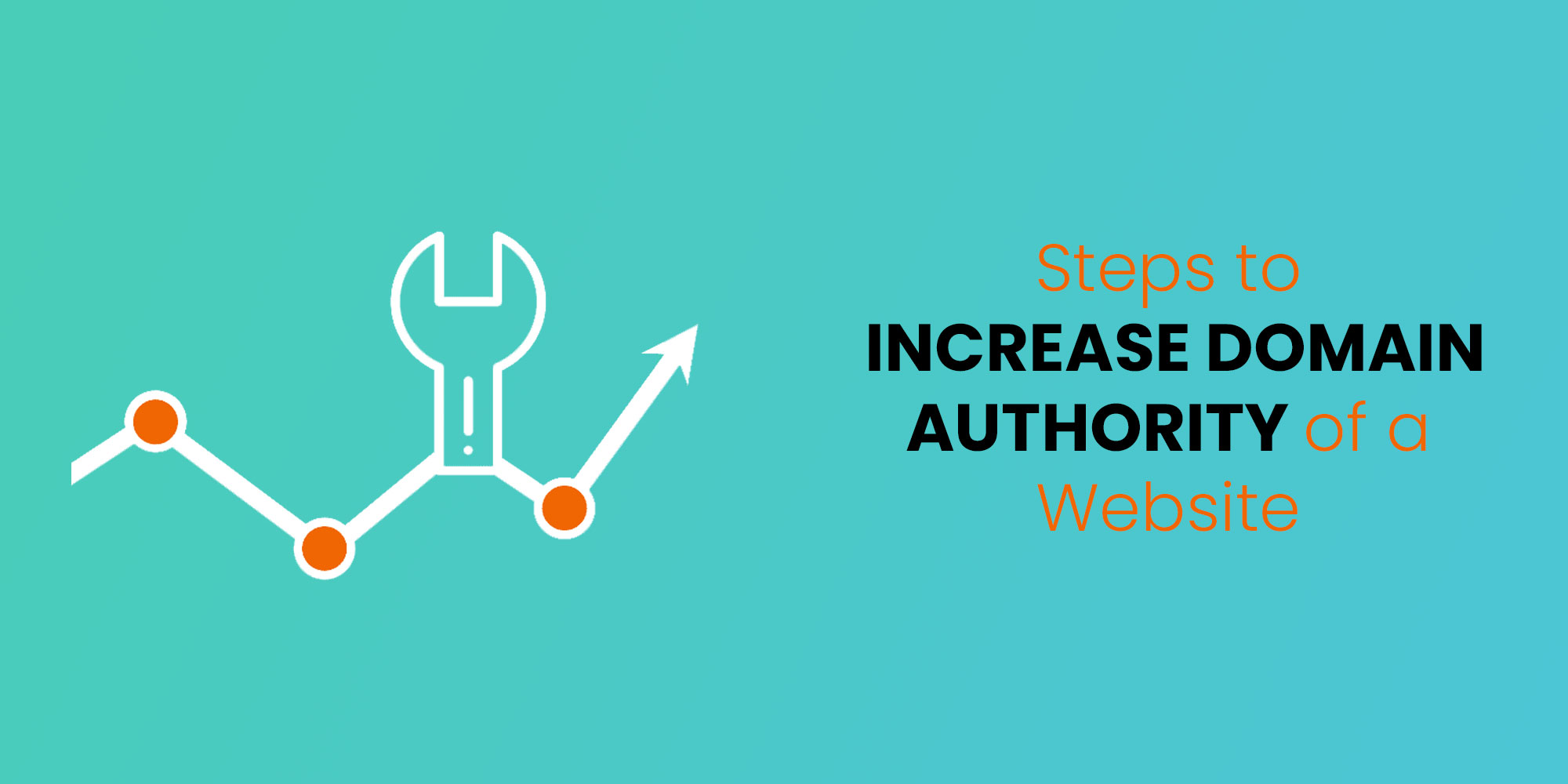

Website authority is built by being genuinely worth citing on a specific set of topics, and then being cited. Everything that works reduces to that: publish material substantial enough that other people reference it, cover a subject thoroughly enough to be recognised as a source on it, and remove the technical obstacles preventing search engines from seeing either.
Before any of that, one correction that changes what you should be measuring.
Domain Authority is a score created by Moz. Domain Rating is a score created by Ahrefs. Similar metrics exist from other vendors. They are useful comparative tools built by third parties who estimate ranking potential from link data.
Google does not use any of them. They are not inputs to its ranking systems. A page cannot rank better because a vendor raised its estimate.
This matters practically. If you optimise for the score, the fastest route is acquiring many links from sites that themselves have high scores — which is exactly what link vendors sell. The score rises. Rankings do not, because Google's link spam policies treat links intended to manipulate ranking as violations regardless of what any third-party tool reports.
Use these scores the way they are meant to be used: as a rough comparative signal for whether a site's link profile is improving over time, and as one input when evaluating a potential publisher. Do not treat them as a target.
There is no universal threshold, and the question is less useful than it appears. The score is logarithmic — moving from 20 to 30 is far easier than 60 to 70 — and it is relative to whatever else the vendor has crawled.
The only comparison worth making is against the sites currently ranking for the queries you want. If they sit in the 30s and you are at 25, the gap is bridgeable. If they are in the 70s, authority is not your immediate constraint — you would be better served targeting more specific queries where those sites do not compete.
Judge your own score as a trend rather than a number. Rising over six months means your link profile is improving. Its absolute value tells you very little.
Google does not publish a metric called authority, but its documentation is reasonably clear about what it is trying to reward. Four things matter.
Links remain a genuine signal, but relevance and independence matter far more than volume. One link from a respected publication in your field, given because someone found your work useful, outweighs a hundred from directories and paid placements.
The distinction Google draws is between links you earned and links you arranged. Guest posts written primarily for links, paid placements, and reciprocal link schemes all fall on the wrong side of that line and are covered explicitly in the spam policies.
Sites recognised as sources on a subject tend to cover it comprehensively rather than in isolated posts. If you publish one article about ecommerce SEO, you are a site with an article. If you publish thoroughly across the subject — technical, content, UX, measurement — and those pages link sensibly to each other, you begin to look like a source on it.
This is why the cluster structure matters more than individual post quality. Depth in a defined area beats breadth across many.
Google's guidance on creating helpful, reliable, people-first content describes what its systems aim to reward. E-E-A-T is not a score you can check; it is a description of qualities.
Practically, it means: content produced by people who have actually done the thing, clear authorship where authorship matters, claims that are accurate and sourced, transparency about who you are, and content that reflects genuine first-hand knowledge rather than a rearrangement of what already ranks.
Authority signals cannot accrue to pages search engines cannot crawl, render or index. Crawlability, correct canonicals, sensible internal linking, reasonable performance and mobile parity are prerequisites rather than authority-building activities — but their absence caps everything else.
Most content is not linkable, and that is not a criticism — an ordinary service page or a competent how-to article serves its purpose without earning links. Material that earns citations tends to share features: original data, a genuinely useful tool or template, a strong and defensible position, comprehensive reference material, or first-hand documentation of something others have only theorised about.
You do not need many. A handful of genuinely referenced assets does more than fifty forgettable posts, and it costs less in total effort.
Choose the subjects you intend to be known for and cover them properly. For each, that means the foundational explainer, the practical how-to, the comparison, the common problems, and the honest limitations — all linked to each other so the relationship is visible.
Internal linking is the underrated half of this. It distributes authority through your site and it demonstrates the relationship between pages. A cluster where every post links to its hub and the hub links back is legible in a way that isolated posts are not — the mechanics of which are covered in publishing consistently.
Link building that works looks less like outreach and more like participation.
The unifying test: would you want this link if it passed no ranking value at all? If yes, it is probably the kind Google wants to count. If the only reason is SEO, it is the kind Google is trying to discount.
Sites that behave like recognised entities tend to perform better over time — people searching for them by name, consistent representation across the web, mentions in places that have nothing to do with SEO, real reviews from real customers.
Branded search volume is one of the more honest indicators available. It is difficult to manipulate and it correlates with the recognition that authority is supposed to represent.
Buying links. Directly against the spam policies. Raises vendor scores, risks manual action, and the sites selling them are usually selling to your competitors too.
Private blog networks. The same, with extra steps and a worse failure mode when the network is identified.
Mass directory and bookmark submissions. Largely ignored. A holdover from a much older era of search.
Guest posting purely for links. Named specifically in the spam policies. Guest posting to reach a genuine audience is fine; the distinction is whether you would do it if the link were nofollowed.
Reciprocal link exchanges. Easily detected and discounted.
Publishing volume for its own sake. Thin content dilutes rather than accumulates. Twenty substantial pages outperform two hundred shallow ones, and cost less to maintain.
Before pursuing new links, understand the profile you have. Most sites of any age carry a mix that nobody has examined.
Google's guidance is that most sites should never need the disavow tool — its systems already ignore the great majority of spam links without penalising the target. Reach for it only if you have received a manual action for unnatural links, or you genuinely know that links were built manipulatively and cannot be removed.
Disavowing speculatively is a real risk: it is entirely possible to remove links that were helping, and there is no undo that restores their effect quickly. Absent a manual action, the safer answer is to leave the profile alone and concentrate on earning better links.
Two checks routinely find value that already exists. Look for pages returning 404 that still have links pointing at them — those need redirecting to the closest equivalent, and it is the cheapest authority recovery available. And look for mentions of your brand that are not linked; a polite note to the author converts a fair share of them.
Since the vendor score is not the goal, measure the things it is a proxy for.
| Signal | Why it is meaningful |
|---|---|
| Referring domains from relevant sites | Count of distinct sites matters more than count of links |
| Branded search volume | Recognition, and difficult to fake |
| Number of queries you rank for | Breadth of topical coverage recognised |
| Rankings for non-branded terms in your core topics | Whether depth is being rewarded where it counts |
| Direct traffic trend | People arriving because they already know you |
| Third-party score, as a trend only | Rough directional indicator of link profile change |
Report the trend in referring domains rather than total backlinks. A hundred links from one site is one relationship.
The phrase "domain authority" encourages thinking of authority as one number attached to a website. Google evaluates pages, and a strong site does not automatically confer strength on every page it hosts.
Two practical consequences follow.
A weak page on a strong site still competes on its own merits. Publishing thin content under an established domain does not make it rank. It is more likely to sit unindexed, which is precisely the pattern that produces the "crawled, currently not indexed" status people find baffling on otherwise healthy sites.
Internal links are how site-level strength reaches individual pages. A page nothing links to receives little regardless of how strong the domain is. This is the most common reason a well-written article never ranks — it was published, indexed, and then orphaned in the archive with nothing pointing at it.
Before writing anything new, check whether your existing pages on a topic actually link to each other. Building those connections is faster and cheaper than earning external links, and on most sites it is the larger untapped gain.
Three mediocre articles on the same subject compete with each other and none accumulates enough signal to rank. Merging them into one substantial page, and redirecting the other two into it, concentrates whatever links and history each had.
This is usually more effective than writing a fourth. Audit for overlap before commissioning new work — the fix is often consolidation rather than production, and it also removes the internal competition that was suppressing all three.
Longer than most plans assume, and the honest answer is that it depends on where you are starting.
A site with a reasonable foundation adding genuinely citable material can expect to see movement in query coverage within a few months and meaningful ranking improvement in core topics over two to four quarters. A new domain with no history takes substantially longer, because there is nothing yet to build on.
What does not happen is rapid change from any legitimate method. Anyone offering to raise your authority quickly is offering to raise a vendor score quickly, which is a different thing and usually the risky thing.
Steps one through five are entirely within your control and account for most of the available gain. Step seven is where people start, and it is why so much authority-building effort produces so little.
Cover a defined set of topics thoroughly, publish a small number of genuinely citable assets, link your content together so the structure is visible, ensure nothing technical blocks crawling or indexing, and earn links by being useful to real audiences rather than by acquiring them. There is no shortcut that does not carry risk.
There is no universal threshold. Compare against the sites currently ranking for your target queries — if they are close to you, the gap is bridgeable; if they are far above, target more specific queries instead. Watch your own score as a trend rather than treating its absolute value as meaningful.
No. Domain Authority is a Moz metric and Domain Rating is an Ahrefs metric. Google uses neither. They estimate ranking potential from link data and are useful for comparison, but optimising for the score rather than the underlying signals leads directly toward tactics the spam policies prohibit.
For an established site with a sound foundation, expect movement in query coverage within a few months and meaningful ranking change over two to four quarters. New domains take longer. Any method promising fast results is raising a third-party score rather than genuine authority.
No. Paid links intended to manipulate ranking violate Google's spam policies, and the sites selling them typically sell to your competitors as well. The score may rise while rankings do not — and the downside, a manual action, is far more expensive to recover from than the links cost.
Pick the single topic you most want to be known for and list every page you have on it. If the list is short, or the pages do not link to each other, that is the gap — and it is a cheaper fix than any link campaign.
Where the constraint is capacity to run the off-page side consistently, our off-page SEO services cover digital PR and link earning as an ongoing programme, built around the methods above rather than around acquiring placements.
Our 4.8 average client rating is built on delivering the results we promise. From SEO rankings and lead generation to web development and paid marketing, our clients across 40+ countries have shared their experience publicly.
4.8

Digital Marketing and SEO Agency Reviews about SIB Infotech


Rupesh Maniar
Real Value Finloan Services Pvt. Ltd.
SIB Infotech has designed website for our company. We are very happy with outcome. They are not only professional but also putting their heart into work. We will always refer them for quality work and perfect price.
Reviewed From


Tima Elhajj
CEO & Founder, Tima Media
The client loved the platform that the SIB Infotech team developed for them, especially the calculator function. The company appreciated the team's high level of professionalism, communication, and care on the project. They are happy and willing to work with the team again.
Reviewed From